Wanted: Your Letters and Woes
Issue 20 of New Escapologist is slowly entering production (Issue 19 is still fresh and tasty) and we need some more Letters to the Editor and Workplace Woes.
Workplace Woes is an opportunity for readers to anonymously let off steam about their jobs, past or present.
Letters to the Editor is a place to tell your escape story in brief, to talk about your unusual or creative living conditions, to recommend a book or a film to your fellow Escapologists, to suggest proven money-saving tips, or to say something about an item from a previous issue.
Please keep your Letters and Woes to 300 words or fewer (or allow yourself to overrun on the understanding they’ll probably be trimmed). Items for either format can be funny or anger-inducing or informative or all of the above.
It’s always particularly nice to receive Woes from the worlds of retail or hospitality or from the outdoorsy professions (e.g. from farming or the construction industry), but if your story is simply office-based then that’s good too!
Thanks everyone. Over to you.
Would a Less Consumerist Society be Better?
Deep inside a book called The Day the World Stops Shopping by J. B. MacKinnon, the people you and I call Escapologists are cited as anecdotal evidence by a professor of Finance called Aswath Damodaran:
The idea that a less consumerist society would be better stems from the fact that everyone today knows somebody who stepped off the money-in, money-out treadmill, simplified their life and ended up happier.
That’s us! We’re setting the example! We’re making them think!
But would everyone stepping off the treadmill really make for a better society? Mackinnon, a journalist, looks to the fall of the Soviet Empire:
What is most extraordinary about the collapse is that civilisation did not, in fact, come to an end. We find neither massive starvation nor strikes and food riots, neither the destruction of society nor its explosion.
and:
92 per cent of the nation’s potato harvest came from dachas and gardens … By night, people would enjoy the fruits of their labour, playing cards, debating and drinking. In this extreme economic catastrophe, they were seized by the strange exhilaration of disaster. There were endless parties in the dachas. … There was hardship but also excitement,” [said someone who was there], “it was like they’d been let out of prison.”
A better life? Well, according to that one guy it was like being let out of prison.
JB Mackinnon is not saying that the fall of the Soviet Empire was a right old hoot. He’s saying that, even in such an extreme example, a mass exit from consumer society was not the end of the world. Today, in the West, nobody is planning to take away our consumer privileges in such a sudden and total way. It’s just an illustration that maybe, we can do perfectly well with less in pursuit of better lives individually and to save the world collectively.
*
New Escapologist Issue 19 and the anniversary edition of Escape Everything! are both available now.
Reggie Perrin at 50

Today sees the 50th Anniversary of the first broadcast of The Fall and Rise of Reginald Perrin.
The classic BBC sitcom charts the antics of a middle-aged office worker who snaps, will take no more, and escapes.
Reggie was the original Escapologist and I used to watch the series over breakfast when plotting my escape.
You can watch watch the series and read the original books by David Nobbs.
EDIT: From a Radio Times item this afternoon about RP’s enduring appeal:
Adapted by David Nobbs from his own novels, [the series] saw Perrin reacting with escalating eccentricity to the madness of middle management … Dictating rude letters, having hippo hallucinations, pumping loganberry essence into the river where his boss is fishing. Things like that.
Ronnie Barker said of the source novel that he laughed 283 times and cried twice, and there is a darkness to the premise – after all, the lead character is driven to the point of faking his own death in order to reinvent himself. The phrase “doing a Reggie Perrin” soon entered common parlance.
[Screenwriter Simon Nye says:] “We love any character who questions the status quo or shines a new light on the way we live our lives. Reggie Perrin does that, despite just wanting a normal life full of love, sane relationships and honesty. Maybe we are all a bit Reggie, all aware that modern life is basically absurd and makes fools of us all.”
*
New Escapologist Issue 19 and the anniversary edition of Escape Everything! are both available now.
The A4 Project
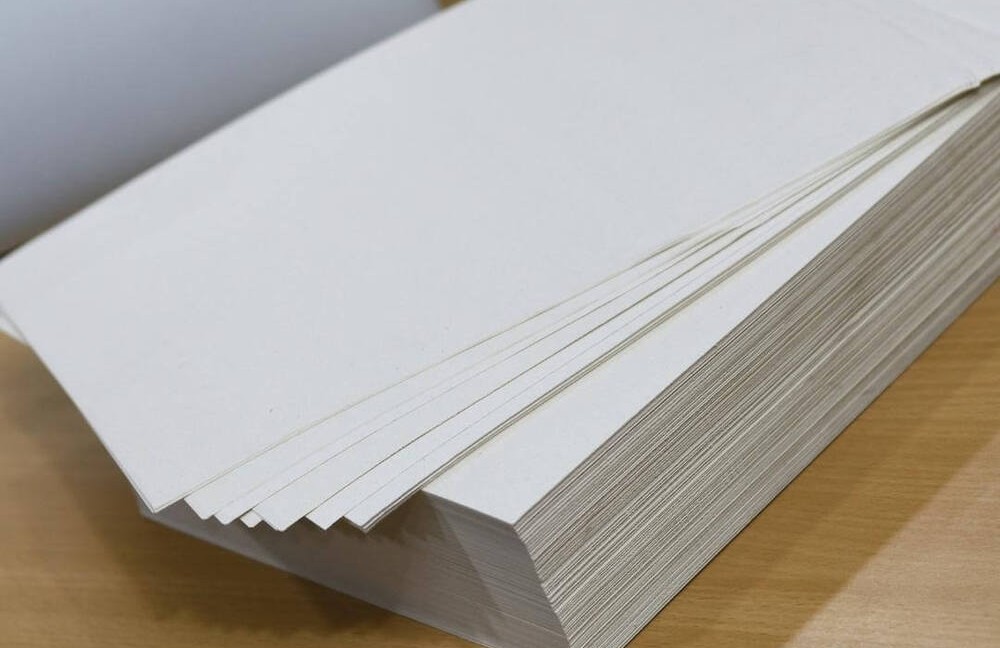
Brushing my teeth last night, I started to wonder about how to continue New Escapologist should it become unsustainable after Issue 21. (See the August newsletter to hear about the financial challenge).
One solution is to return to the magazine’s origins and to print it for free on stolen office paper.
Alas, I don’t have access to an office or its paper anymore, but it occurred to me (while flossing) that I could ask OUR READERS to steal office paper and send it to me, ideally through their workplace outgoing mail.
Maybe people could even pay for their copy in stolen office paper. The patrons (those who currently spend a couple of hundred quid when we launch a four-issue Kickstarter) could be the people who send the most stolen office paper, but even those who send just a few sheets of stolen office paper would receive their copy for free.
Some people would still need to pay for their copy with money, as I’d still like to receive some some recompense for my time and also to pay for the stamps.
Is this a good idea? There’s the obvious legal/moral objection in encouraging theft, but I find that I don’t care very much about that. Come after me, employers, I dare you. Another concern is the decline in quality (I enjoy making a good-looking product worth its space on a bookshelf), but this could be outweighed by the appeal of the mischief. The main show stopper is that I’d need to pay for a Mailbox so that I don’t have to give my home address to the type of dubious character (that’s you, madam) who is willing to steal paper from work and send it to me. Could be fun though, eh?
*
Here’s where to tip me and New Escapologist before it comes to this.
New Escapologist Issue 19 and the anniversary edition of Escape Everything! are both available now.
6.7 Million US Men 🌭
From Jon Ronson’s new book, The Castle:
By 2022, one in six US men aged between 25 and 54 wasn’t working. But within that statistic was a more startling one: two‑thirds of those men weren’t even looking for jobs. That’s 6.7 million US men, and countless more around the world, who’ve just … bowed out.
Result!
I was aghast.
What? Why?
Why had those men opted out of society? What havoc was that purposelessness wreaking on their inner lives, and on the lives of their loved ones – partners, parents, children? And given that some of them would inevitably grow sick of a life in the shadows – of a life of male nothingness – what might happen next?
Oh! I can help you there. They haven’t opted out of society. They just don’t have jobs.
You see, a lot of us (and not just men but all genders) are looking for alternatives to humiliating life-draining drudgery that doesn’t even pay the bills anymore.
In fact, given the numbers you’re citing here, I’d say an alternative system is emerging. Society isn’t “jobs.” No longer indulging the job market is hardly to live “a life in the shadows.”
Do you know who you sound like, Jon? You sound like this guy.
We’re doing a rational cost/benefit of the jobs available to us and — on finding them wanting, often after giving several good years to them — using our imaginations to come up with something new.
These quotations come from a promotional excerpt of The Castle, but I’ve also read the book. The book’s not by any means a stinker, but I have issues with it and one of them is the reactionary attitude to changes in the world of work.
It’s okay to look askance at trends in automation or zillennial demotivation or problems with the pension system, but you’re supposed to interrogate the issues first — to understand them — before deciding a position. It clearly interests Jon that so many people have rejected conventional employment as a way to live, but his questions are fevered and rhetorical when they should be genuine, more journalistic journeys towards answers. He says things like “how do they live? How do they eat?” without really trying to find out.
*
New Escapologist Issue 19 and the anniversary edition of Escape Everything! are both available now.
Akiya
There’s another nugget of interest in the article we discussed yesterday:
Maybe we greyhairs could learn from younger people, tired of their own daily grind. A few years ago, Mika and Jesse, a millennial couple from Vancouver, moved to Japan and discovered, on the island of Shikoku, an abandoned house –or akiya — that they could move into for $300 [per year]. At least nine million akiya dot the Japanese countryside, the result of changing demographics and the mass exodus of young people to the cities.
Indeed. I have heard of this. In Japan it’s more usual than in the West to knock houses down and rebuild them instead of moving into an old house. This mentality, combined with the usual tendency for populations to gravitate towards cities, has led to quite a few traditional old houses (often in poor condition, unfortunately) just sitting around. They’re perceived as practically worthless so those unafraid of “a fixer-upper” can pick them up for a song.
They contacted the owner, signed a rental agreement (around $300 for a full year), cleaned the house up and began their new existence, about as different from their old urban life as possible. Jesse works as a blacksmith, forging cooking knives, and Mika as a YouTuber, crafting hypnotic videos of their “akiya life.”
A YouTuber you say? This seems to be them:
These are the adventures of two people who skipped the line of the Western retirement-woe shitshow and found joy in a life that’s sustainable: economically, ecologically, psychically. Their first video has been streamed more than three million times. Three years later, they’re in the black.
They have a blog with important guides to Akiya escape planning, including posts about the real process, things to consider and everything you need to know about akiya.
*
New Escapologist Issue 19 and the anniversary edition of Escape Everything! are both available now.
Is Retirement Dead?
There some depressing stuff in McLean’s magazine — Canada’s equivalent to Time or Newsweek — in a piece called Retirement is Dead.
There’s a few ways to read that sentence. Maybe retirement is dead because the whole idea of conventional employment — the conveyor belt from school, to work, to grannification, to grave — is out of date. After all, if you bow out of the rat race with a relatively beefy escape fund while generating a small income through investment or by monetising your creative interests, retirement doesn’t make a lot of sense any more. Why would you want to stop if you’re having fun?
The article acknowledges that “an abrupt phase change from productive, useful working life to complete non-work is pretty bizarre on the face of it.” It is quite extreme isn’t it? No wonder so many people struggle to adapt to retirement.
Alas, the focus of the article is that Canadians (i.e. the people of one of the most civilised and efficient countries in the world) can no longer afford a comfortable retirement. The writer clearly has high ideals about what comfort should entail, but the sentiment is probably accurate. It’s not uncommon to see elderly people working in American supermarkets and fast food places. It’s not right.
My 22-year-old daughter is convinced that, for her cohort, communal living will be the norm. I’ve asked her to save some space in the yard for us to pitch a tent — with an extension cord to plug in my laptop.
Meh. As fates go, is that so bad? It’s just a shame (a scandal really) that people might be working for forty years or more, just to reach the basic setup that any barely-employed person can have immediately. It is to toil under a scam.
Reduce your material needs. Adjust your ideas about comfort. Research the alternative models.
*
New Escapologist Issue 19 and the anniversary edition of Escape Everything! are both available now.
Opportunity
From The West Pier, part of Patrick Hamilton’s Gorse Trilogy:
All Ryan wanted to do was escape at the earliest possible moment — to run for his life, in fact — and here was the chance.
I like this. It reminds me of Hannibal Lecter seeing the glint of the tiny pin that will allow him to pick the lock of his cage and presumably to slice off the guard’s face to make a mask.
Not that I’m saying Escapologists should aspire to be like Hannibal Lecter. Be like Ryan. Run for your life.
*
New Escapologist Issue 19 and the anniversary edition of Escape Everything! are both available now.
There’s a Better Life and You Think About It, Don’t You?
RIP the People’s Parton.
Workin’ 9 to 5, what a way to make a livin’
Barely gettin’ by, it’s all takin’ and no givin’
They just use your mind and you never get the credit
It’s enough to drive you crazy if you let it
9 to 5, yeah, they got you where they want you
There’s a better life and you think about it, don’t you?
It’s a rich man’s game no matter what they call it
And you spend your life puttin’ money in his wallet
9 to 5, oh, what a way to make a livin’
Barely gettin’ by, it’s all takin’ and no givin’
They just use your mind and they never give you credit
It’s enough to drive you crazy if you let it
9 to 5, yeah, they got you where they want you
There’s a better life and you think about it, don’t you?
It’s a rich man’s game no matter what they call it
And you spend your life puttin’ money in his wallet
9 to 5…
*
New Escapologist Issue 19 and the anniversary edition of Escape Everything! are both available now.
The Art of Life

The reason I post so many quotes from literature is to show that the desire to escape is neither uncommon nor certifiable.
On the contrary, it’s perfectly normal and has been with us since, oh, around the time of the industrial revolution. But I’m sure that’s just a coincidence.
Here are some diary entries from 1909, written when W. N. P. Barbellion was but 19 years old. He wanted to escape the career chosen for him by his father (“journalism,” which actually meant the transcribing of local council meetings) and to take up his ikigai of zoology.
June 2nd. I have been for ever cogitating, worrying, devising means of escape.
October 14th. Returned home from London. Felt horribly defeated in crossing the threshold. It was so obviously returning after an unsuccessful flight.
December 23rd. I nearly escaped into a seaside laboratory, and now suddenly to be flung back into the dirt and sweat … seems very hard, and it is very hard.
Self-absorbed? Well, it is a diary. On the other hand, H. G. Wells, writes in a preface to the published diaries:
An egotism, like an eggshell, is a thing from which to escape; the art of life is that escape.
He escaped in the end, by the way. To rockpools and countryside woods in the short term, then all the way to the British Museum.
*
New Escapologist Issue 19 and the anniversary edition of Escape Everything! are both available now.