A Whole World Out There
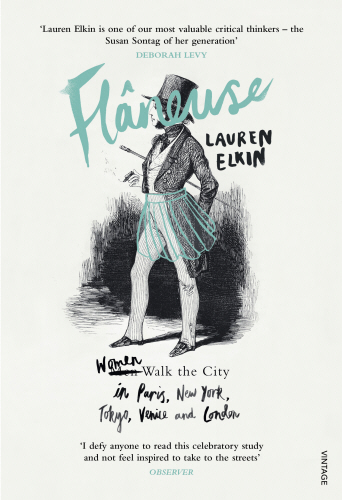
This is from Lauren Elkin’s Flâneuse, a good book about walking in cities and its relationship with personal freedom:
There was a whole world out there and I didn’t have to live in America simply because I was born there. I could live anywhere I liked.
This was an epiphany. One rainy night over a pasta dinner with my flatmate, we contemplated the enormity of it. We can go anywhere, we can do anything, we told each other.
She goes on to say “but it wasn’t true” because there are complications with visas and borders, challenges around finding income when you live abroad.
As someone who has had the same epiphany and then struggled through the same problems, I’d say it’s better to contemplate the enormity of your freedom in adventurous good faith than to deny it in bad faith just because it can be difficult.
To start with, you can go to a lot of places for six months without any kind of visa woe. Like Rolf Potts, you can save a battery of wealth from perfectly conventional employment and use it to escape for just a little while or to buy time while you figure out how to escape more permanently. You can travel across multiple countries in Europe or states in America in a state of constant motion without worrying about visas at all. Other places, where visas are a problem, you can still work intelligently and patiently to, you know, get the visa.
Elkin herself is an American who lived in France for several years as an academic. She went “home” to New York when her Paris work contract was not renewed, but she still lived abroad legitimately for years. She lived in Toyko for a while too, under the spousal sponsorship of her partner who was offered a job in finance there.
Getting a visa for my Canadian partner to live with me in the UK was an anxiety-producing nightmare but (a) the UK is particularly troublesome on that front (I had less difficulty with my visa in the other direction), (b) we were asking for rather a lot compared to someone who just wants to live abroad for a year or so, and (c) we won in the end.
I do not deny the awfulness (awfulness!) of the artificial barriers to moving around freely–like Rutger Bregman, I’d prefer to see a borderless or soft-bordered world–and we all know that many of those barriers are getting less and less permeable. But to assume you’re not free to live wherever you want and do whatever you want is to live in bad faith. Do it! Be fleet of foot! Walk through walls!
My partner and I, when moving around between the UK and Canada, did everything by the book, but you could just go somewhere anyway if you feel bold enough. Millions of people move around the skin of the planet illegally or by bending the rules. Momus lived in Japan for years by going back and forth on renewed tourist visas. When one of his visas was coming to an end, he’d go to Europe to work for awhile or go travelling to somewhere like Korea, returning to his girlfriend’s apartment in Japan on a fresh tourist visa for another six months. It came to an end eventually but nothing bad happened to him. And even now he remains a British citizen living in Paris and Berlin without much care for formalities. Heroic.
(Lauren Elkin’s book is great, by the way. I might say more on it sometime but for now I’ll just say that it’s a great addition to any flaneur’s personal library).
*
For tales of visa woe, please try The Good Life for Wage Slaves. For more positive exercises in good faith and meditations on the enormity of human freedom, try Escape Everything! (a.k.a. I’m Out).
Economic Bullying at its Finest
[The UK’s chancellor] Kwasi Kwarteng will tighten benefit rules for part-time workers, requiring them to work longer hours or take steps to increase their earnings.
Just as the world wakes up to the bounty of a 4-day week, the UK government decides to crack down on part-time work by reducing the financial support available to low-income households.
I’ve said in my books and in New Escapologist that most people don’t work by consent but are “economically bullied” into it. I’ve sometimes wondered if that expression is too much, but here is a government who fully admits to this withdrawal of support being an attempt to “grow the labour supply.” Which is a nice way of saying “let’s starve them out.”
They want to trim our means to escape overwork so that they can “fill vacancies” and get back to growing the economy. Without getting into the weeds over whether this can even work or not, whether the current part-time workforce is fit or qualified to fill this apparent abundance of vacancies, it’s a clear example of the sort of economic bullying I’ve been talking about.
To deal with the “problem” posed by the Great Resignation, of people taking charge of their own destinies as best they can within the confines of The Trap, the government are removing a line of recourse. As of next week, people will only be able to work part-time on the government’s increasingly authoritarian terms. As if it weren’t hard enough already to stay alive in any way other than a full-time job.
There’s many reasons to work part-time and it would be nice if the leaders of one of the world’s richest countries would recognise this. Maybe your mental health cannot support the burden of full-time work. Maybe your physical health can’t either. Maybe you want to use your time to build your own business (inventing your own “vacancies” and “growing the economy” on your own terms). Not that there’s anything wrong with idleness, but we know that most part-time workers have something else going on.
The government’s attack on part-time workers is consistent with the current (and general) Conservative idea that the UK’s economic problems are the result of regular people not toiling hard enough. It has nothing to do with decades of Tory corruption or their costly mismanagement of the pandemic or their gradual destruction of public assets, naturally. And nothing to do with many working-class people already working multiple jobs to make ends meet.
It’s perfectly convenient for them to peddle the lie that we’re not working hard enough. They have little interest in improving the world (or even in “building back better” or “levelling up” or whatever they’re trying to fob us off with now) and plenty of interest in serving themselves and their friends in business. I honestly try to see the case for right-wing ideas, but what is the point of even having a civilisation if you’re not going to let it serve the majority? What is the point of sucking up all the money to serve the 1%? What is the use of shoving almost everyone into pointless consumer economy work that exacerbates the climate crisis? What’s the endgame?
Blocking an important route to part-time work is at odds with the way the world is now alert to more humane modes of work, such as WFH and the 4-day week.
“Economic Bullying” is the correct term and this is economic bullying at its finest. And now that I’ve learned not to mince my words, let me say that if you live in the UK (or England really), I strongly advise you to vote these cunts out as soon as the opportunity arises.
Major Success in 4-Day Week Campaign Trials
From the BBC:
Many UK firms taking part in a four-day working week trial have said they will keep it in place after the pilot ends.
More than 70 firms are taking part in the scheme where employees get 100% pay for 80% of their normal hours worked.
At the halfway point in a six-month trial, data shows that productivity has been maintained or improved at the majority of firms.
I suppose it’s possible that the firms who signed up to the trial were already predisposed to the benefits of a shorter work week. But this does feel positive, doesn’t it? That people might be waking up to the deleterious health effects of full-time jobs and the ridiculous demands they put on life. Maybe the taboo is broken at last? Maybe we can be honest about the cost of full-time work?
[The campaigners] said that employees had benefitted from lower commuting and childcare costs and claimed that a parent with two children would save £3,232.40 on average per year or roughly £269.36 per month.
Why has it taken so long, folks? Why? Why? Why? The sums could be done on the back of an envelope but instead we need to have practical trials and lightbulb moments in the year 2022. But, hey, we’re getting there. We’re getting there.
Tired of the everyday grind? There’s a shoulder to cry on in The Good Life for Wage Slaves.

What Would Beyonce Do?
“They work me so damn hard,” Beyoncé sings on the track. “They work my nerves / That’s why I cannot sleep at night.” The song also includes lines such as “release ya job, release the time,” which are originally from “Explode,” a 2014 song by Big Freedia.
For some reason, the willfully po-faced analysis of pop music lyrics never fails to make me laugh. Simon Singh’s scientific dismemberment of Katie Melua’s Nine Million Bicycles springs to mind, as does Richard Herring’s egalitarian dissection of Avril Lavigne’s Sk8ter Boi.
Thanks go then to Reader V for putting us onto the Wall Street Journal’s journalistic button-holing of economists for their views of Beyoncé’s recent anti-work anthem in which she describes quitting a job:
On one hand, there are bullish economists such as Brad DeLong who argue that Beyoncé’s advice is essentially sound. “Yes, if you are going to jump, now is definitely the time to jump,” says the University of California, Berkeley economics professor, who was deputy assistant Treasury secretary during the Clinton administration. “And now is the time to make sure your boss knows that you could and might jump.”
But on the other hand:
“I’d say this is not a good time to quit your job without a plan,” says Jennifer Doleac, associate professor of economics at Texas A&M University. “In an economic downturn, most employers will stop hiring employees before they start firing existing employees, so going into a recession without a job is extremely risky,” she says. “Simply quitting without finding a new source of income is not an option for most people who are not Beyoncé.”
So act of your own free will, oh listener to pop music, but, let’s face it, “WWBD” is always a relatively useful touchstone.
Backroom Antics
I enjoyed this anecdote about some failed workplace mischief at the blog of writer John Hoare:
If the [sales] reps could bring in [promotional items] like pens, maybe they could bring in something a little bigger. Like, say, a wall clock, branded with their company’s logo. I could put them all on the wall of the order office, and we could get an international time zones thing going. LONDON – PARIS – NEW YORK, and the like.
I believe we got to a grand total of two clocks on the wall before it was stopped from above. No reason given; certainly no worries about bribery, however idiotic that would have been when it came to clocks. Just a general air of “Obviously, we aren’t going to do that.”
I tried to have a little bit of fun in what could be a fairly boring job, and it was immediately stamped down on with no explanation. Because who would want to enjoy themselves at work?
Reader, I laughed the laughter of recognition. I’ve experienced many similar defeats in trying to have a micron of fun (or reclaim a modicum of dignity) in dreary jobs. The chain-breaking incident comes to mind but there was also the chess game:
I had a student job in retail and I put a small magnetic chess board in the stockroom. A co-worker and I would move a piece whenever one of us went in there, enjoying a gradual game of chess over the course of the weekend.
Most of the time, I’d go for some stock, take a glimpse at the board, see that my opponent hadn’t moved yet, and continue to idly cook my next move in the back of my brain while working. Pretty low-level fun really.
Mind you, I was working at the cash register one time and I saw my opponent emerge from the stockroom with a smug look on his face, trying not to meet my gaze lest I see that he’d done something clever or even cheated. His smug face and slinking demeanor were very funny to me so I had to bottle up my laughter in front of my customer.
Our chess games were eventually busted when a supervisor found the board. I was surprised by her attitude because I was on friendly terms with her. “It’s bloody cheeky,” she said angrily, though her attitude seemed to be one of disappointment in a trusted underling. More specifically, I think she was afraid of getting in trouble with her bosses for it. I just felt bewildered. I didn’t see the problem.
Who could care that we had a chess board in the stockroom? It mattered not a jot. It was just a small way of having fun against a backdrop of grunt work.
If I’d actually laughed in front of the customer that time, I could have said “I’ve been slowly playing chess with a colleague in the stockroom; I’ve just seen him looking like he thinks he’s made a good move but I’ll get him for it later.” And they’d either laugh along at how adorable we were or, more likely, think nothing of it at all. Nobody expects shop a part-time assistant to be completely formal.
I suppose now that my supervisor lived in terror of something in her jurisdiction not being right, all minor infractions potentially building towards dismissal. Capitalism’s done a real number on us, hasn’t it? Can’t even play sideshow chess or put a bunch of clocks on a wall without fear of someone getting the boot.
For more tales of attempted workplace survival try my book The Good Life for Wage Slaves.
Books That Imagine a Different Working World

After a year of seismic changes in the labour market, young adults are questioning and rejecting the ideas around work that they have been fed throughout their lives, starting with the “dream job”, hustle culture, and #girlboss feminism.
The work-related reading list at Verso books is rather good.
Their Inventing the Future by Nick Srnicek and Alex Williams helped to clarify my thinking towards the end of New Escapologist’s print era but any one of these books promises to be radically thoughtful.
And for a breezier read, there’s always The Good Life for Wage Slaves.
Doing Nothing

In the 1970s & 80s, anthropologists working in small-scale, non-industrial societies fastidiously noted down what people were doing throughout the day. I’ve been exploring the data & am struck by one of the most popular activities: doing nothing.
This is an excellent Twitter thread from anthropologist Manvir Singh. Thanks to friend Shanti for putting it our way.
Most of the high-ranking activities in these plots are well-studied by psychologists. But how much do we know about doing nothing? Not much. Living in fast-paced, industrialized societies with constant access to entertainment, it’s easy to lose sight of the value of doing nothing.
So there we have it. Let it not be said that being at peace isn’t the natural state, that this isn’t the state we should all be driving towards instead of some nebulous and never-sated idea of “success.” Success is the artificial thing, hassled into us by industrial society.
Today is hot (also because of industrial society) so I’ve been spending most of my time lying in bed beneath a single cool sheet while listening to the calls of starlings though the open window. Hardly arduous, and about as close to “doing nothing” as it’s possible to get. And now I know that the people of the Efé and Madurese communities would find my choice an agreeable one.
I hope you’re staying cool, ideally by doing nothing, wherever you are.
Tired of the everyday grind? Survive in style with The Good Life for Wage Slaves. Available now.
The Lethal Comforts

I’m reading the pleasingly-titled The Air-Conditioned Nightmare (1945) by Henry Miller. It’s a scathing critique of American (read industrial) life by way of a grumpy travelogue.
Miller left a bohemian life in Paris to see his own country again in the hopes of coming to terms with it and feeling less like a cultural refugee, but it didn’t work.
He didn’t hate America but he didn’t love it either and one of the key problems was Capitalism; the way the grindstone ethic infected everything while everyone claimed to be “free,” the way a gulf in liberties widened between rich and poor while both tribes cooperated to tear the natural environment to pieces.
The book contains many wise observations relevant to Escapology and the world’s current problems even though it was written almost 80 years ago.
This moment, however, is one of my favourites because, as well as seeing the twin-locking nature of work and consumerism I like to discuss, he ties it directly to the car.
The saddest sight of all is the automobiles parked outside the mills and factories. The automobile stands out in my mind as the very symbol of falsity and illusion. There they are, thousands upon thousands of them, in such profusion that it would seem as if no man were too poor to own one. In Europe, Asia, Africa the toiling masses of humanity look with watering eyes toward this Paradise where the workers ride to work in his own car. What a magnificent world of opportunity it must be, they think to themselves. (At least we like to think that they think that way!)
They never ask what one must do to have this great boon. They don’t realize that when the American worker steps out of his shinning tin chariot he delivers himself body and soul to the most stultifying labor a man can perform. They have no idea that it is possible, even when one works under the best conditions possible, to forfeit all rights as a human being. They don’t know that the best possible conditions (in American lingo) mean the biggest profits to the boss, the utmost servitude for the worker, the greatest confusion and disillusionment for the public in general.
They see a beautiful, shinning car which purrs like a cat; they see endless concrete roads so smooth and flawless that the driver has difficulty keeping awake; they see cinemas that look like palaces; they see department stores with manikins dressed like princesses. They see the glitter and paint, the baubles, the gadgets, the luxuries they don’t see the bitterness in the heart, the skepticism, the cynicism, the emptiness, the sterility, the despair, the hopelessness which is eating up the American worker. They don’t want to see this—they are full of misery themselves. They want a way out: they want the lethal comforts, conveniences, luxuries. And they follow in our footsteps—blindly, heedlessly, recklessly.
Tired of the everyday grind? We offer you escape! Try The Good Life for Wage Slaves and I’m Out today.
Emotional Audit
For many years I had tried to live a life that made sense to others. I had swanned from a prestigious university straight into a job at a prestigious newspaper. I had got married young, to the man I began dating at 23, we had bought a beautiful home, got ourselves a cat, and begun to talk about starting a family. I had tried, very hard, all my life, not to put a foot wrong. And yet something inside me felt perpetually crushed.
This article is a bit humblebraggy, quite waffly, and has some truly eye-popping displays of unchecked privilage. But it also contains some textbook-worthy escape stories. Yay!
“I was deeply unhappy,” [Ben Short] says today. “Beset by anxiety and stifled and frustrated by a career which was supposed to be creative but often felt anything but.”
and:
Rather than walk out entirely on her career, [Lucy Leonelli] negotiated taking a gap year from her job, using the time to explore a range of other lifestyles and write a book about her experiences.
Additionally, the article’s author mentions the significance of running an “emotional audit”:
The pandemic has encouraged many to perform an emotional audit of their lives; with a break from entrenched routine has come a recalibration of work and home, a recognition that life is perhaps too short to spend doing something you do not love.
Yes! Now we’re almost speaking the language of Escapology. A “Life Audit” is what I encourage you to conduct in the “Preparation” chapter of Escape Everything! (now also known as I’m Out). Without fretting about specifics and practicalities, make a list of five honest priorities. Something like “travel, art, family, etc.” and dig deep to find them. Dwell on them while you’re plotting your escape.
Let them glow inside you. If and when you manage to make a break for it and find yourself living a life on the lam, refer back to your life audit frequently as a reminder of your new programme and/or as part of a secondary life audit to find if you’re the same person you were when plotting your escape.
I did not go back to my office job. I did not return to my marriage or my home. For a long time I lived in the state of nothing, trying to work out who I was, and how I wanted to live. I think, if we are lucky, all of us are given a moment to question the narrative of our lives.
For more daring tales of escape via “the state of nothing”, try my book all about these very things.