A New-Look New Escapologist? Have Your Say!
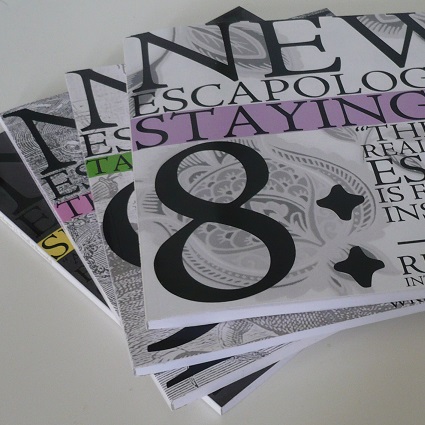
We might well take the magazine a new direction in 2016.
I’m not completely sure how it will look yet but we’re discussing three possible options:
1. We’ll leave the magazine as it is. If people are attached to it, why meddle?
2. We’ll start producing a more conventional magazine with regular columns, humour pages, letters to the editor, etc.
3. We’ll start producing an online monthly concern. For a quid a month you’d get a substantial monthly essay and the occasional bonus. There might be a higher bracket where you can also get access to the archive, and perhaps a quarterly podcast. We’d also collect the best of this stuff into a printed annual collection if there’s enough interest.
So what do you think? We launched a survey to members of the mailing list, but blog readers can have a say too. Complete this tiny questionnaire to let us know your thoughts.
★ Buy the brand-new Issue 12 of New Escapologist at the shop; buy our most popular digital bundle; or get the Escape Everything! book.
Issue Twelve — Out Now!
New Escapologist Issue 12 is out now!
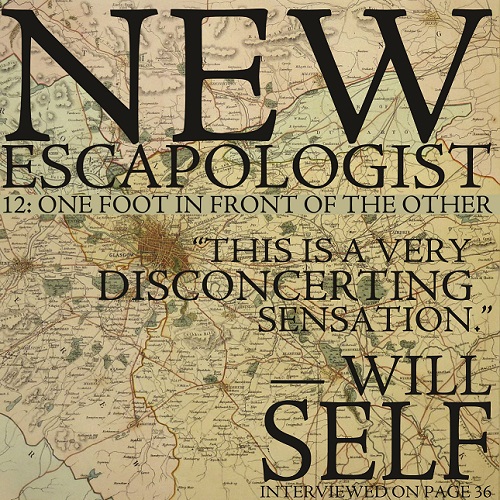
It’s landed! Yes, “One Foot in Front of the Other” is New Escapologist‘s long-overdue walking-themed issue. We’ve got a marvellous interview with Will Self; accounts of world-renowned walks like the Camino de Santiago and the Lyke Wake Walk; poetry from Murray Lachlan Young; Paula Billups on drifting in Berlin; Joshua Glenn on Baudelaire’s perfect flâneur; and plenty of the free-wheeling Escapological writing you’ve come to expect and adore. Grab your copy today.
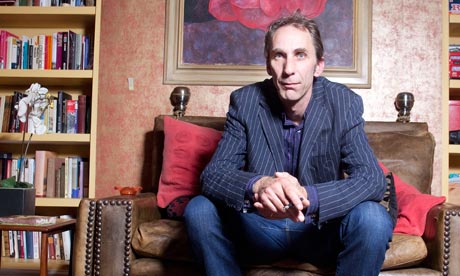
Subscriber and pre-ordered copies will be in the post soon.
★ Buy the brand-new Issue 12 of New Escapologist at the shop; buy our most popular digital bundle; or get the Escape Everything! book.
Peak Stuff?

Post-scarcity anarchism finds an unlikely ally!
[Ikea’s] head of sustainability told a Guardian conference that consumption of many familiar goods was at its limit.
“If we look on a global basis, in the west we have probably hit peak stuff. We talk about peak oil. I’d say we’ve hit peak red meat, peak sugar, peak stuff … peak home furnishings,” Steve Howard said. He said the new state of affairs could be called “peak curtains”.
Maybe we finally have enough.
★ Buy the latest print issue of New Escapologist at the shop; buy our most popular digital bundle; or pre-order the book.
WoMBaT
There was a round in the pub quiz this week about acronyms popular online. Our team knew all but one: WoMBaT.
You probably know it already. It means Waste of Money, Brain and Time.
I quite like it. It’s so dismissive.
Car ownership? WoMBaT!
Television? WoMBaT!
Conventional day job? Definitely WoMBaT!
Wait, a day job is a waste of money? Well, it can be. A day job costs quite a bit in commuting, appropriate attire, lunches, lattes, consumer treats to cheer you up on the weekend, anti-depressants, income tax, and the revenue you might have earned doing something else.
WoMBaT!
Not to be confused with actual Wombats, of course. Those are lovely.

★ Buy the latest print issue of New Escapologist at the shop; buy our most popular digital bundle; or pre-order the book.
Striders
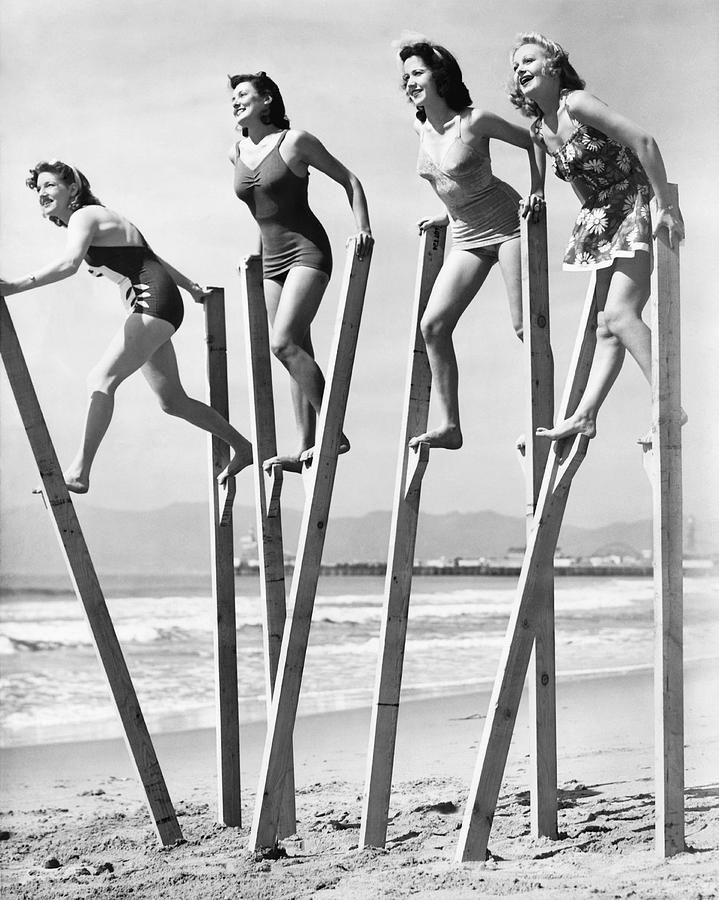
The theme of New Escapologist Issue Twelve is walking. It’s a beautiful and dazzling edition starring WILL SELF, PAULA BILLUPS and MURRAY LACLAN-YOUNG. You can pre-order it here.
★ Buy the latest print issue of New Escapologist at the shop; buy our most popular digital bundle; or pre-order the book.
An Escapologist’s Diary. Part 46. 2015 Review.

Hooray! It’s time to file my annual (2011, 2012, 2013, 2014) report to my imaginary shareholders.
The point of this diary is to show what the life of an Escapologist is like. Or at least, what the life of one Escapologist is like. These annual roundups are year-in-the-life type things written in the same spirit. Here goes.
The year began in Montreal (at Phelan’s house party in the snow) but in March we made the big move back to Scotland. For both of us–me and Samara–the move was 2015’s defining event.
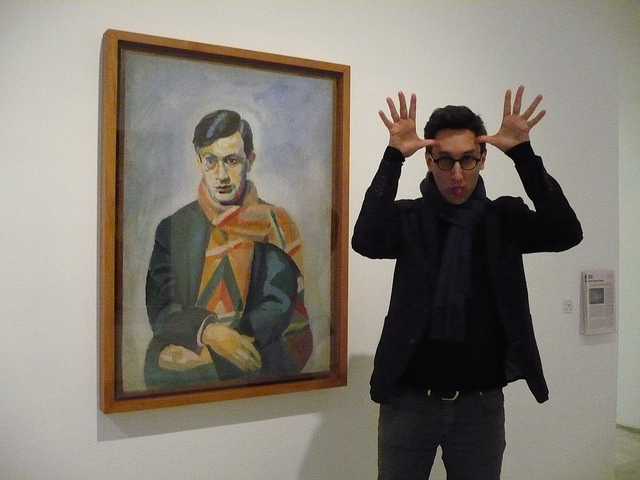
Before hitting the Glasgow dirt though, we spent two weeks in Spain. We were art tourists in Madrid and then beach bums in Alicante. This is a hot tip for mobile Escapologists, actually: travel while homeless. In the Prado, I saw this portrait of Tristan Tzara:
Our search for a Glasgow apartment was mercifully short. A friend, inspired in part by New Escapologist, was leaving Scotland for Germany. (She’s now very settled and has just had a baby girl). I remembered that she owned her flat and might be looking for tenants. So now we have a place to park our chaise as well as an Escapological micro-economy running between us and our errant landlady. Thanks Heather!
We’d barely been in Britain five minutes when we were summoned back to Canada. My book, A Loose Egg, had been shortlisted for the Leacock Medal. I doubted I’d win (and I didn’t) but was aware that 2015 might be the only year I’d be eligible let alone shortlisted, so I didn’t want to miss my chance to experience the ceremony and meet the in-crowd. So back to Canada we went, first to Toronto and then to Stephen Leacock’s old stomping grounds of Orillia.
On the way home, we stopped in Timperley to see the crowdfunded statue of Frank Sidebottom.

In April, we popped down to London to warm a couple of seats in the QI studio. Here we meet the QI elves, got a whistle-stop behind-the-scenes tour of the Natural History Museum (meeting the corpses of Darwin’s pet octopus and a giant squid!) and were waved at by the queen.
A slightly dodgy “financial requirement” of immigration to Britain has meant a brief return to grunt work for your humble narrator. I worked for a month at a University and now I’m doing a stint in the public sector. The money’s nowhere near enough for the time I have to put in, and if it weren’t for the fact I’m essentially doing community service for deigning to import a foreigner, it would feel like a complete waste of time. But never mind: Christmas Eve marked my 100th day of slavery. I need 130 days, if my calculations are correct, before I can quit.
Despite this unpleasant detail, the year saw some decent writing sessions, mainly on Escape Everything! and finishing up the crowdfunding process of the same. Thanks to everyone who helped. The book will be out on January 28th 2016.
I also started a nature diary: a journal of interactions with urban wildlife. The idea was for it to form a sort of Escapological novel, but I’m not sure it’s working. This bit of writing is probably just for me rather than for publication. Having said that, I’ll be printing some excerpts in New Escapologist Issue 12, so let me know what you think if you read it.
Performance-wise, I did a couple of diary-reading nights (loved these) and a performancy talk about humorists as part of a friend’s bookish art project. I’m thinking of doing a show in this line at next year’s Edinburgh Fringe, but only if I can work out a few structural issues with my performance.
The best thing about coming home has been getting back together with friends: Laura, Neil, Johnston, Fraser, Tim (hello!). We also joined a pub quiz team. We play the quiz almost every Monday now. We’ve won a lot of beer, though I fucked up a recent episode for us by insisting on the Exorcist demon’s name being “Legion” when in fact it’s “Pazuzu”. Bah.
What else? Um. I joined Twitter. Landis came to visit from LA, as did Caitlin. We held owls in Edinburgh. Emily came over from New York. We got rained on a lot in Storms Abigale though Frank. I interviewed Will Self. Samara discovered embroidery. We saw the new Star Wars film twice. I had some new profile pics taken by new friend Alan. I joined the Scottish Green Party but later fell for Jeremy Corbyn. We attended a baby-naming ceremony. We made a contribution to the Museum of Water. Lentus Ambulandus and I kept this blog going, including a series for Stoic Week. We celebrated Hanukkah. We spent Christmas in London.
As ever, thank you for reading, dear Escapologists. I’m very, very grateful. Thank you for the attention. Thank you for the funding. Thank you for the comments and retweets and the enthusiastic emails. Happy New Year to you all! x
Oh Cripes. I almost forgot. The book list! That’s what you all tune in for. This year, putting my money where my mouth is, I wanted to read more books by female authors. I did. Over half the books I read were by women. So here are my books of 2015 (as ever, an asterisk* denotes a book read aloud):
Paul Auster – Invisible
Franz Kafka – The Trial
Paul Auster – Man in the Dark
Ben Aaronovitch – Rivers of London: Books 1-5*
Jeremy Dyson – The Cranes that Build the Cranes
Sue Townsend – The Diary of Adrian Mole
Michael Palin – Travelling to Work: Diaries 1988-98*
Simon Donald – Him Off the Viz
Gerald Durrell – The New Noah*
Caroline Lucas – Honorable Friends?
Jacquie Durrell – Beasts in My Bed
Sy Montgomery – The Soul of an Octopus
Lyanda Lynn Haupt – Pilgrim on the Great Bird Continent
Patricia Highsmith – Ripley’s Game
G. Willow Wilson & Adrian Alphona – Ms. Marvel Vol. 1-2
Anneliese Mackintosh – Any Other Mouth
Edward St Aubyn – Lost for Words
Tim Bradford – A London Country Diary
Geoff Nicholson – The Lost Art of Walking
David Carlson and Landis Blair – The Hunting Accident
Esther Woolfson – Field Notes From a Hidden City
Marie Kondo – The Life-Changing Magic of Tidying
Olivia Williams – Gin Glorious Gin
Tom Hodgkinson (Ed.) – Idler 43: Back to the Land
Emma Kennedy – The Tent, The Bucket and Me
Pannonica de Koenigswarter – Three Wishes: An Intimate Look at Jazz Greats
Caitlin Moran – Moranthology
Stephen King – The Dead Zone
Roald Dahl – The BFG*
Angela Carter – Wise Children
Ursula Le Guin – The Lathe of Heaven
Jon Ronson – What I Do
Caitlin Doughty – Smoke Gets in Your Eyes
Agatha Christie – Partners in Crime*
Paul Richards – A Book of Mosses
Kathleen Jamie – Findings
Naomi Mitchison – Memoirs of a Spacewoman
Fran Lebowitz – Metropolitan Life
Patricia Highsmith – The Price of Salt
And the ones appreciated but left unfinished:
Jules Evans – Philosophy for Life and Other Dangerous Situations
Steven Pinker – The Sense of Style
John Sutherland – Lives of the Novelists
Gavin Maxwell – Ring of Bright Water
Sue Townsend – The Queen and I
I exit the year glad to be back in Glasgow but newly homesick for my Epicurean, threadbare life of full-time writing.
★ Buy the latest print issue of New Escapologist at the shop; buy our most popular digital bundle; or pre-order the book.
Set Phasers to Bollocks

I got a hankering to watch Star Trek: Voyager this morning. Not sure why. Don’t judge me. My mum says I’m cool.
In the episode, lapsed monster Seven of Nine tries (as usual) to learn something about humanity. She happens to catch Captain Janeway unwinding on the Holodeck, sculpting a clay head in the holographically-recreated environs of Leonardo da Vinci’s workshop.
Seven, an ex-Borg and a slave to efficiency, wants to know why a starship captain would squander time in such a primitive environment away from mission and duty. It’s inefficient, she says, it’s archaic and disorganised. Worst of all, it doesn’t accomplish anything.
Ah, but that depends on how you look at it, explains Captain Janeway. Sometimes, she says, one must be open to disorder and creativity and imagination. These things might not accomplish anything in their own right but they pave the way to usefulness by distracting the mind for a moment or providing metaphors.
To which I say: Booooooooooooooooooooooo!
According to Janeway–spokesperson for the Protestant Work Ethic–leisure is there to facilitate more work. Fun, to her, is about the efficiency gains that might result from it.
This is exactly the problem with the Protestant Work Ethic: the idea that work is virtuous in its own right, that it’s the main project.
It’s a slave mentality and one you’d imagine a Borg coming out with more than a Federation Starship Captain, who comes from a postcapitalist, post-scarcity world in which everyone could finally put their feet up and be happy.
(But, of course, in Star Trek almost everyone works anyway, for free. Because they love it, the kinky buggers).
Asking what leisure is “for” misses the point. It’s like asking what music or mountains or orgasms or squirrels are “for”. Some things exist in their own right. Not everything is fuel or resource.
Of course, Seven of Nine might well ask what leisure is “for” because she was a freakin’ Borg. Janeway’s a human though, supposedly a pretty wise one, and should have seen through the red herring in the question. And her answer is wrong: saying that leisure is there to facilitate work is like saying peace is there to facilitate more war.
Janeway’s mentality is the same as the one held by managers and motivation experts who hold that coffee breaks, lunch hours, weekends and vacations are there to assist productivity, rather than, say, provide pleasure and well-earned (not that it should be earned) respite.
Boooooooooo, Janeway, Boooooooooo!
★ The post-print phase of New Escapologist is just beginning. Go here to join in.
★ You can also buy all thirteen issues in print or PDF (in newly discounted £20 bargain bundles) at the shop.
Inventing the Future
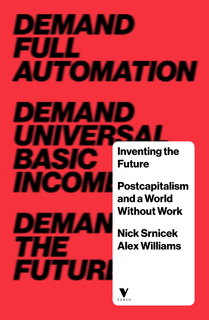 1. Demand Full Automation
2. Demand Universal Basic Income
3. Demand a shorter work week
4. Destroy the Work Ethic
Believe it or not, this manifesto is nothing to do with New Escapologist. It comes from Nick Srnicek and Alex Williams, the academics behind a new book called Inventing the Future.
They gave a talk at a university building not 300 meters from my Glasgow flat last week so I went along to hear them speak.
I’m glad I went. It was good to see that someone is taking this philosophy seriously and with the establishment force of academia behind them, rather than exhibiting it as an art project or a wry comment somewhere. It feels as though the cartridge is loaded.
The general attitude of Alex and Nick was “what’s all this work for if we’re never getting the freedom it was supposed to buy?” and “why can’t we organise systems that will cater for this?” Sounds familiar, I know, but this is happening inside the machine now, and not just with people like you and me on the ragged fringe.
The book looks good. Here’s the blurb:
Neoliberalism isn’t working. Austerity is forcing millions into poverty and many more into precarious work, while the left remains trapped in stagnant political practices that offer no respite.
Inventing the Future is a bold new manifesto for life after capitalism. Against the confused understanding of our high-tech world by both the right and the left, this book claims that the emancipatory and future-oriented possibilities of our society can be reclaimed. Instead of running from a complex future, Nick Srnicek and Alex Williams demand a postcapitalist economy capable of advancing standards, liberating humanity from work and developing technologies that expand our freedoms.
★ Buy the latest print issue of New Escapologist at the shop; buy our most popular digital bundle; or pre-order the book.
Book Sale

Hello everyone. Robert Wringham, editor of New Escapologist here.
My long-awaited book about escape, Escape Everything!, is due for proper bookshop release on January 18th. Those of you who pledged in the crowdfunding programme will receive it a little sooner. Exciting!
Issue 12 of New Escapologist, the walking issue, will appear around the same time. Among other wonderful treats, it features an interview with Will Self.
In the meantime, I’d like to plug my two other books. These books are already printed, sitting on a shelf in my flat and ready to be dispatched by my own fair hand. I’ll even sign them with a personal message, do a drawing for you on the fly leaf, or leave it in completely mint condition (whichever option you like best).
Neither is directly escape-related but they’re written in the voice I hope you’ve all come to love.
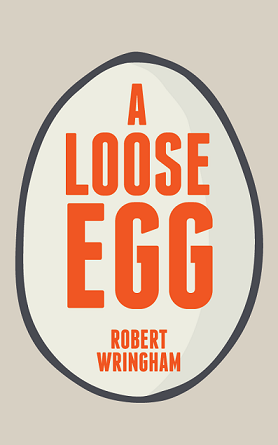
1. A Loose Egg. This is a collection of short, funny essays. Of everything I’ve done it’s the work I’m most proud of. It was shortlisted for the prestigious Leacock Medal for Humour back in March. It’s self-published and made with pure love. Despite a nice critical reception, hardly any copies of this book have sold, so be a member of a very exclusive club and get your copy here for £12.
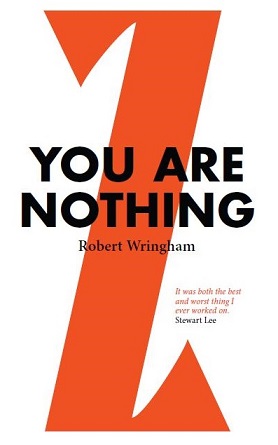
2. You Are Nothing. This is my 2012 history book about avant-garde comedy troupe Cluub Zarathustra. The Cluub was the project of comedians Simon Munnery, Roger Mann and Stewart Lee. I suggest in the book (convincingly, I hope) that it was the birth of all modern comedy worth talking about. Get a reduced £8 copy for a very limited time here.
As ever, Issues 1-11 (print and digital) of New Escapologist are available in the shop, individually and in value bundles.
Perfect Christmas presents for unconventional friends and relatives, I’m sure you’ll agree.
Seasons Greetings, one and all! Rob. x
Why we produce only two issues a year
New Escapologist is a biannual publication. In a normal year you can expect to see two copies released, typically around April and October.
A media student got in touch recently with questions about this. She’s writing a thesis on the survival of biannual publications. How cool is that? In case it’s of interest to the perverts among you, here’s the little interview we did.
How and why do you think a biannual frequency can strengthen your position in the market and enhance the identity of your magazine?
I think it prevents us from burning out too quickly. In terms of quality, we usually have five months in which to produce a hundred-page magazine, which is a lot of time to play with and to get things right. It’s time enough to find a cover-worthy interviewee and time enough to write thoughtful, unhurried essays. In aiming for a long shelf-life, we make sure to fill our space with substantial ‘evergreen’ features and to keep ephemera to a minimum (we don’t print book reviews or super-topical news items or anything like that).
Economically, it gives us five months to turn a profit on the current edition instead of just one or two months so it makes financial sense too. I go into sales mode as soon as the creative process is over, and one hand washes the other. There are big monthly magazines out there, full of presumably lucrative adverts, who don’t survive. We, meanwhile, simply take our time and play a longer game.
Why did you choose to make the magazine biannual in the first place?
It was an issue of capacity. We’re a small-press publication and everyone involved has other creative projects on the go. Too many issues per year would have been too much work, especially if we wanted to maintain the quality and to tend to our other concerns.
Have you ever considered to change the frequency of your magazine and would your today decision be influenced from the general shift from print to digital?
I have considered increasing the frequency, yes, but decided against it. It has nothing to do with print versus digital though, which I think is a red herring when discussing magazine production: content truly is king. I sometimes look to other magazines I admire like the Idler and the Chap. They’re now quarterly and bi-monthly respectively and I sometimes think maybe we should be doing the same. But I don’t think it would be sustainable and I don’t think it would be fun. Small is beautiful. Besides, the lifestyle we promote in New Escapologist is quite unusual and against-the-grain: the magazine should reflect that in it’s production ethic and release schedule as well as it’s content and design!
★ Buy the latest print issue of New Escapologist at the shop; buy our most popular digital bundle; or pre-order the book.