Who Are You?
Some of you may remember our reader survey. Well, it’s still open.
New Escapologist has more readers today than when we originally launched the survey, especially in the US and Canada. I’d love to know a bit more about you all and to hear what you think of the magazine and blog. Simply go here to complete the questionnaire if you’d like to.
Here are the results from the first 71 respondents (though 103 have actually completed it now).
You could also (as well as or instead of the survey) tell us what you’d do in a world without work.
Pleased to meet you.
★ Tired of the everyday grind? Pre-order the New Escapologist book today.
Bookchin
Bookchin held the utopian conviction that contemporary post-scarcity technological conditions could free people of drudgery. But this could only be achieved with a combination of decentralized, face-to-face democratic politics and committed trusteeship of the natural world.
We’ve spoken briefly of post-scarcity economics before. To add a little more without getting too deep into political theory, here’s a neat intro to socialist libertarian Murray Bookchin (written by friend of idling, Mark Kingwell).
★ Tired of the everyday grind? Pre-order the New Escapologist book today.
What Matters Most
Another tiny sample from the book:
After filling ostentatious houses with crap, people retire at 70 and say “you know, what matters most are family and good health”. Well, duh.
If you’re interested in thinking about “what matters most”, here’s New Escapologist‘s Things of Value.
★ Tired of the everyday grind? Pre-order the New Escapologist book today.
Office Rocker
Editing a chapter of my book, and this tiny part made me laugh:
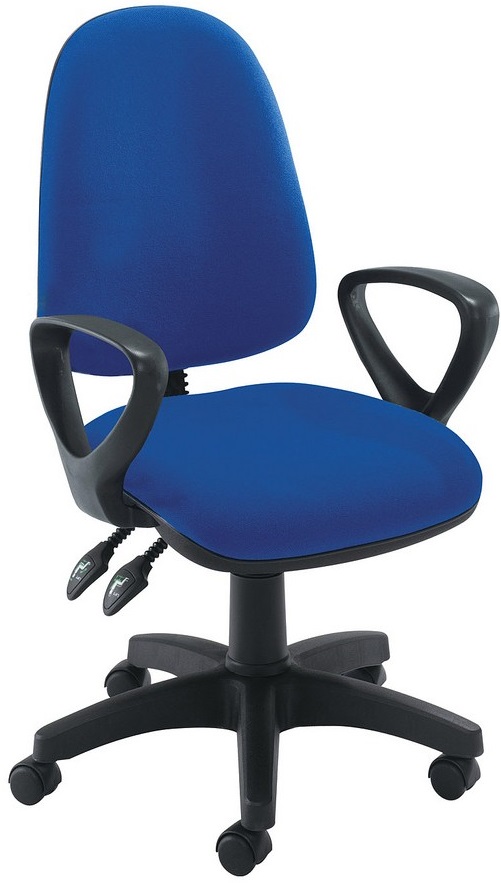
If you’re writing a novel or a film script and you want to quickly get the idea across that your character has a crap life, all you have to do sit him on an ergonomic swivel chair.
★ Tired of the everyday grind? Pre-order the New Escapologist book today.
What Would I Do if I Didn’t Go to Work?
What would I do if I didn’t go to work?
It’s a good question, a frequently-asked one even. It’s asked sarcastically by dullards and sincerely by those of us with imaginations.
In a way, the question is at the heart of Escapology. Where are you going today? What would you like to do with yourself? How would you like to apply your imagination and willpower if given a chance?
I’d like to dedicate a sub-chapter of the forthcoming Escape Everything! book to answering this question through examples.
If you’d like to be mentioned in the book (even if anonymously), drop me an email with a brief description of how you spend your time instead of going to work (or how you imagine you’d spend it if you didn’t go to work).
There are many ways of spending days, so let’s show the world a few!
Mind the Gap
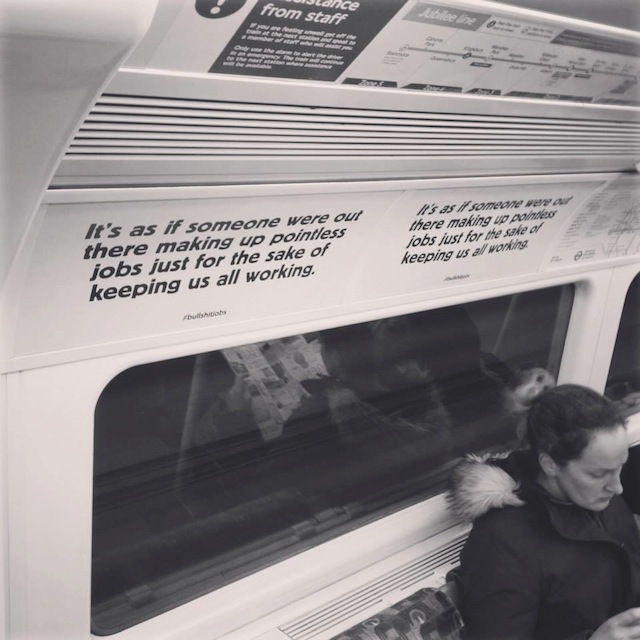
Thanks to friend Nicola for telling us about these brilliant subway hacks.
Yesterday, activists pasted quotations from Dave Graeber’s Bullshit Jobs essay over existing adverts on the London tube.
They did this specifically yesterday because Monday 5th is the first day back to work after Christmas for many Londoners, and tube commuters are probably the ones who will benefit most from a dose of Graeber wisdom and mischief.
Among the quotations used are:
It’s as if someone were out there making up pointless jobs for the sake of keeping us all working.
Huge swaths of people spend their days performing tasks they secretly believe do not really need to be performed.
and
How can one even begin to speak of dignity in labor when one secretly feels one’s job should not exist?
Ugly, idiotic Vice magazine has an opportunistic interview with Graeber about the posters in which he rises to the occasion to say:
over the course of the 20th century there’s been a huge effort to re-imagine the world; it’s the imagination of these great entrepreneurial geniuses that create all these things—workers are just robots, working in the factories, doing what they’re told, extensions of the minds of these quite great people. It seems there has been an increased emphasis on work as of pure value unto itself.
and:
A job that isn’t bullshit should have concrete benefits to other people. But we can’t do jobs that aren’t bullshit because of debt. That’s a great dilemma from which that movement actually started I think. I would say to unions and organizers, think about that, redefine what is valuable about work—work is valuable if it makes other people’s lives better. It would be nice if we were rewarded for making people’s lives better, not punished. From an individual point of view, think about the way that you can navigate that with your own conscience.
All of this happened while I was sleeping.
★ Tired of the everyday grind? Pre-order the New Escapologist book today.
An Escapologist’s Diary. Part 39. 2014 Review.
Baboosh! Here it is. My traditionally-belated End-Of-Year Report to My Imaginary Shareholders.
The point of this Diary series more generally is to help answer the question, “what would I do if I didn’t have a job?” This, madam. This is what. Or at least, it’s one example. So here we go.

Tardigrades Down Under
Reader Dean confirms safe receipt of his copy of Issue Eleven in sunny Tasmania.
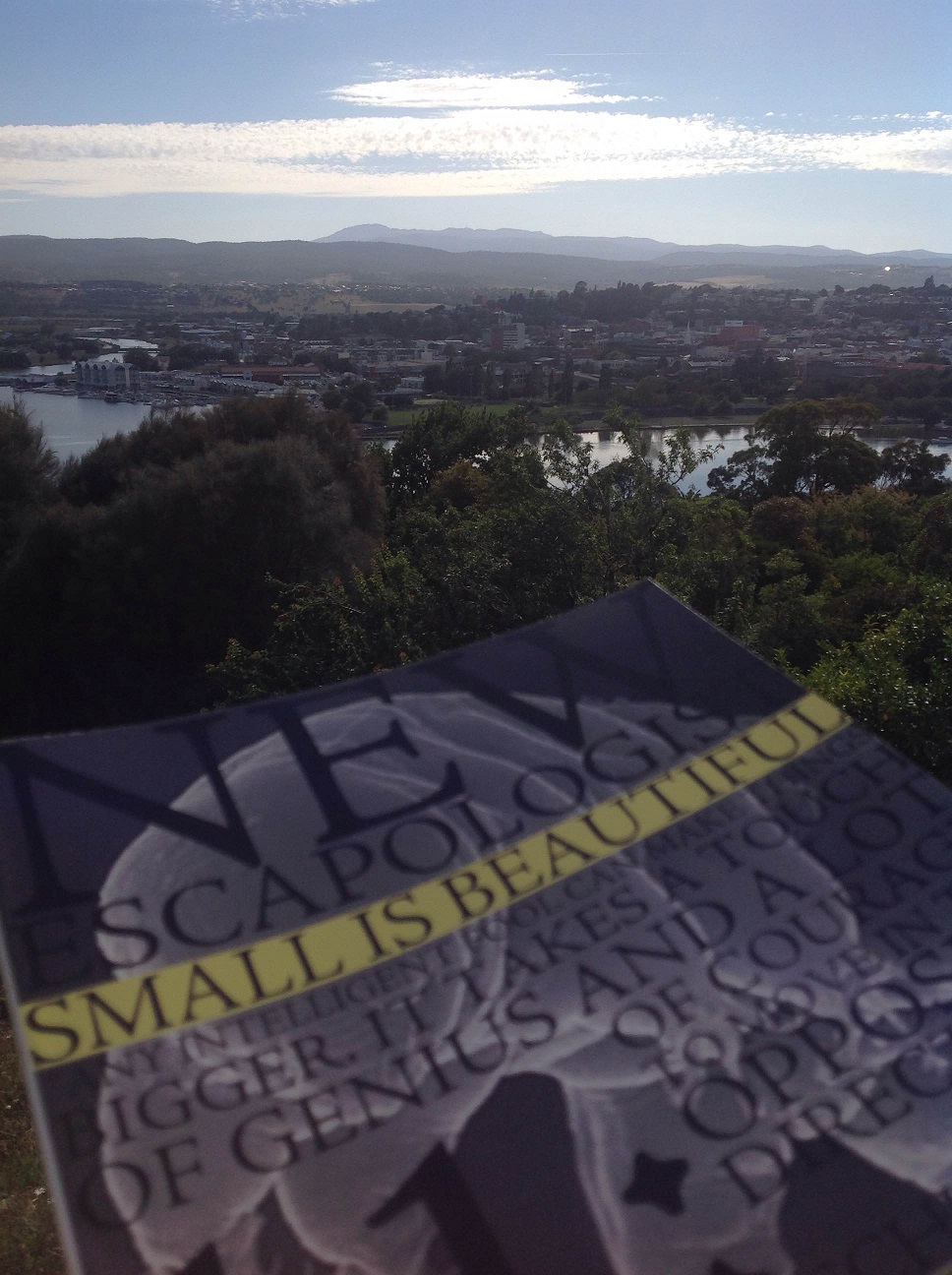
As Dean is our farthest-flung reader, it’s probably safe to say that everyone else’s copy will have been received already.
Happy New Year to every one of our readers, all over the world. x
★ Tired of the everyday grind? Pre-order the New Escapologist book today.
Yuletide Viewing for Escapologists
Can’t believe I never thought of this before.
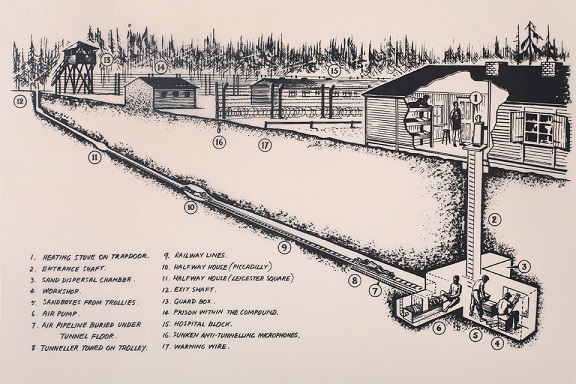
Colonel Von Luger, it is the sworn duty of all officers to try to escape.
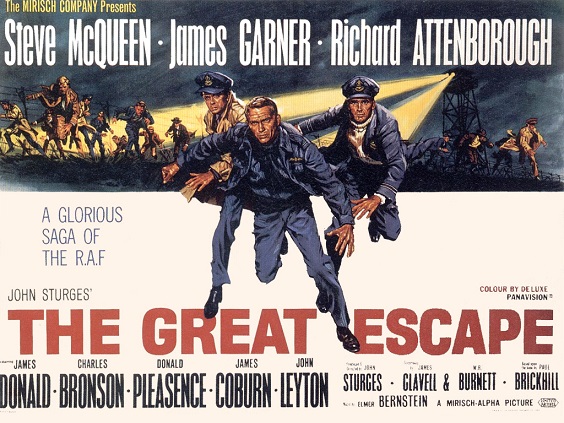
One man here has made 17 attempted escapes. Group Captain, this is close to insanity.
Quite.
And it must stop!
Colonel, do you expect officers to forget their duty?
★ Tired of the everyday grind? Pre-order the New Escapologist book today.
Escape Facebook
Renegade freak that I am, I deactivated my Facebook account last week.
Life is better without it. Already I feel calmer, happier, no longer irritable or twitchy. I bloody knew coffee and tea were nothing to do with that! Sorry I doubted you, oh lovely cuppa.
You’re all your own bosses, but I’d urge you to leave Facebook too. Read our happiness editor’s thoughts on the subject if need a further nudge.
Rather pathetically, I hesitated for about three weeks before finding the courage to click “deactivate.” I kept turning the possible consequences over and over. Would I become a full-on social outcast? Would I lose precious connections to the past? Is there actually something transcendent to be said for participating in the social network, even if it really is a glorified advertising scam?
I made sure I had alternative contact details for people I didn’t want to lose touch with. In doing so, I was strict about who I’d take with me: part of my reason for leaving Facebook was to shed the 250 people I don’t have any meaningful relationship with. I was only in touch with those people in the hopes that they were “potential future friends” or as egotistical social trophies, neither of which is healthy or right. Maybe I’ll reconnect with these people again one day, but in deliberate and organic circumstances.
I also downloaded my “information” before leaving. I only wanted my photographs but the download also contains old messages and posts. I had a quick look at these and, oddly enough, the first to catch my eye was a friend’s public declaration that he’s “winding up his Facebook account.” This message was about seven years old and the fellow in question is still on Facebook today, posting embarrassing status updates around the clock. This was the final nudge I needed!
Doubtless, it’ll be a pain in the arse for a while because almost everyone’s on Facebook, making it a super-convenient directory of humanoids (a “Face Book” even), but ubiquity is just another thing to dislike about it. Facebook is humongous while small is beautiful.
Not that it’s essential to be on a social network at all, but an appealing Facebook replacement might be Ello, a burgeoning ad-free, neatly-designed alternative. It doesn’t come from greedy, world-dominating Silicon Valley but from a bike shop in friendly Burlington: a town I’ve been to and which struck me as lovely.
Ello seems fated to become the betamax of social media: superior to its competitor but failing to win popular traction. But it doesn’t matter. It’ll work for the people who use it. A social network doesn’t need approval from everyone to work. Invite your ten best friends to Ello–the people you actually want to hear from instead of the 300-strong rolodex your Facebook has become–and it’ll work for you. It doesn’t matter what the majority are up to.
In any event, escaping Facebook has been an end in itself. It feels good to have let go. I feel like I’ve passed a gallstone or something.
I’ll now get news from less-dubious reliable sources, accidentally click fewer Daily Mail links, expose myself to less anxiety-producing litter, and talk to friends in more personal ways.
Here’s Tom Hodgkinson on the subject:
Facebook is another uber-capitalist experiment: can you make money out of friendship? Can you create communities free of national boundaries and then sell [crap] to them? Facebook is profoundly uncreative. It makes nothing at all. It simply mediates in relationships that were happening anyway.
★ Tired of the everyday grind? Pre-order the New Escapologist book today.