The Effort of Idling
Tom Hodgkinson of the Idler writes entertainingly in the Standard about his return to London after twelve years of self-sufficiency in the English countryside:
Country life is beset by disasters. Chickens get eaten by the fox. Home-grown lettuces get eaten by slugs. The cabbages get eaten by the pony when it breaks into the vegetable patch. Pipes freeze. The bees die. Homemade bread gets burned. The bore hole pump goes and you have no water for three days. The neighbours complain because you organised a gig in the village hall with Alabama 3 as the headliners. The authorities investigated us when we had our pigs illegally killed at home. Ten years of sipping martinis in the Groucho Club does not, sadly, prepare you for the self-sufficient life.
I’ve loved Tom’s epistles from the countryside in his Country Diary blog at the Idler website. It was precisely the kinds of disaster mentioned above which made it so entertaining. You’re on his side throughout, but it’s the comical floundering of an idealist townie that made it such a pleasure to read.
Such predictable disasters are why I try to avoid the countryside wherever I can. Too much hard work for my liking. Just daily, it’s always a chore to chisel the mud off one’s Oxfords and to get the smell of dung out of one’s three-piece suit.
The proffered alternative — running a trendy shop in a capital city — doesn’t do much for me either. Hobnobbing with Michael Palin and Rhys Ifans looks like a hoot, but the organisational woes would be far too much hassle for this idle gent.
My advice, Escapologists, is to keep things simple. Rent a nice little apartment in a non-capital city and live on a part-time paycheque or — ideally — on the fruit of your independent labours.
Perhaps the most important lesson in Tom’s latest move is that the idle life does not have to be engineered with big, showy lifestyle changes. Total relocation is rather drastic. If you want to work less and to shrug off the mind-forg’d manacles, you’re better off looking for smaller ways to shift your current lifestyle gradually into a idle-friendly way of being.
Pre-order Issue Nine in print or on PDF today.
Buy the complete back catalogue of New Escapologist with a 10% discount.
Or buy the complete back catalogue on PDF, with £1 off the price each issue.
Throwing in the Towel
I’m seriously considering resigning without a job to go to. I have enough savings to survive for several years. I have a number of projects outside work that I’m not getting on with (writing a biography; renovating the house; I’m on the committee of a motor club). I’m letting people down, people who are far more important to me than my employers. Mainly, though, I feel ground down, without even the energy to make a good job of looking for another job.
I’m a bit obsessed with the work and careers advice column in the Guardian. I find it interesting to read about the specifics of people’s job dissatisfaction and to try and spot trends.
Perhaps most revealing is that the advice-seekers aren’t usually complaining about individual things (power-tripping boss, negligent colleague) but a more general dissatisfaction with their job or the work system at large.
Over the past year or so, there’s been a tendency toward people wanting in various ways to throw in the towel, and so they write in to the newspaper to try and find encouragement or a ‘voice of reason’ that will talk them out of it.
It’s worth poking through the archives if you’re interested in people’s quit-or-stay dilemma or want to see the advice given by the expert and the readers in the comments thread.
I sometimes fancy that these people might be readers of New Escapologist, spurred into action by our silly pages. More likely, however, is that we live in a culture of dissatisfaction: where the kind of work offered by most jobs is not really required by Planet Earth in any real way and are only done to pay the rent. Often, you might as well be peddling on a stationary bike, generating electricity for the grid, than what you’re doing.
Pre-order Issue Nine in print or on PDF today.
Buy the complete back catalogue of New Escapologist with a 10% discount.
Or buy the complete back catalogue on PDF, with £1 off the price each issue.
Practical Stoicism
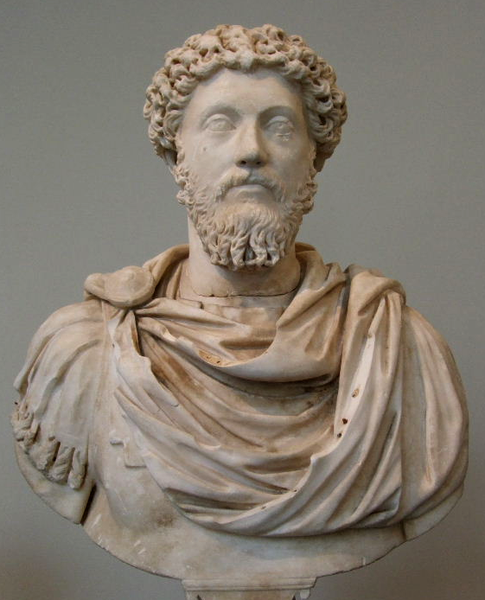
I spent the weekend reading a little book about Stoicism and its potential to be practiced in everyday life. Oddly enough, this week is apparently Stoic Week.
I admired the author’s reason for writing his book: to demonstrate that ancient philosophy can be applied to the modern everyday (and should be, for personal improvement, peace of mind, and a nicer society).
There are three Stoical techniques among the others described by the author that I already find myself doing fairly naturally, and which I can vouch for:
1. Negative visualisation
Imagine how it would feel if you lost something you currently enjoy. How would you cope if you lost your computer, your looks, your teeth, your winter coat, your favourite coffee cup, a loved one, your mobility, your ability to read? All nightmares of varying degrees of severity.
Briefly considering these potential losses makes you deeply grateful for what you have (and science tells us that gratitude is healthy).
It’s a measure of antifragility, psychologically preparing you for occasions of real loss. And, perhaps most importantly, it’s a talisman against insatiability, making you less likely to want more than you currently have. I think this technique might be the true engine behind my tendency toward minimalism and is a genuine way to find contentment.
2. Periodic Voluntary Discomfort
I sometimes like to deliberately endure slight discomfort. I’m not into self-flagellation and I’m not into the “no pain, no gain” school of exercise, but I might try to tolerate a slightly ill-fitting shoe before buying a new one; or see how long I can sweat through a summer before switching on the air conditioner; or push myself to walk five miles instead of catching the bus.
It makes you understand what comfort is, makes you more tolerant, makes you less dependent on luxury or perfection.
It makes you appreciate small luxuries wherever they may be, and to take little for granted. If you’re accustomed to drinking tap water with meals, the occasional glass of wine or iced tea is a marvelous treat. If your main form of transportation is walking , a jaunt in a taxi is quite the adventure.
It’s also humbling: why should you have the newest, hippest and most expensive of everything? Who are you, the King of Siam?
3. Consistent Self-Monitoring
To fulfill a social element of Stoicism, Seneca suggests we reflect upon our actions at the end of each day or, better yet, develop an internal self-monitoring agent capable of assessing our behaviour as it happens. I have this. We probably all have it, but it can be trained to be consistently active and to be on the lookout for certain positive or negative traits.
I’m not naturally generous for example, forgetful that sharing and gregariousness are good virtues to have! But my self-monitoring ability alerts me to instances of this now. This doesn’t mean I obey it consistently, but at least I choose to be an arse now.
Stoicism. It’s what’s for dinner.
Buy the all-new Issue Nine in print or on PDF here.
Buy the complete back catalogue of New Escapologist with a 10% discount here.
Buy the complete back catalogue on PDF, with £1 off the price of each issue here.
An Escapologist’s Diary. Part 36. Dark Matter.
Three domestic opportunities for minimalism arise. Oh baby. It’s rare for even one to come up these days since I’m already down to brass tacks (Tacks? Excessive!).
1. Life without microwaves
A microwave oven is something most devout minimalists are proud to be free of, but since I tend to rent furnished apartments there’s usually one around.
When our microwave exploded last weekend, my girlfriend suggested we try to live without it rather than replace it. Music to my ears!
Since I do most of our cooking the old-fashioned way, the only thing we ever used the microwave for was to reheat leftover coffee (a dirty habit anyway). I suspect we will not replace it. Already the microwave-shaped empty space in our tiny kitchen is nourishing my minimalist soul.
2. Eradication of DVD
Years ago, I minimised my DVD collection by jettisoning the cases and filing the discs into a handy DJ case. I now have an alphabetised DVD collection the size of a shoe box. It’s a work of art.
But! I want rid of it. Watching DVDs has become a bore. I prefer to read books for home entertainment these days; but even if you’re happy to watch videos, DVDs are a lousy experience compared to Internet downloads. They jump, they’re often incompatible with newer media software, and you have to humour the obstacle courses of animated menus and the offensive anti-piracy warnings. So I’m giving away my beloved collection of classic British sitcoms to my friend Phil, a Canadian, who likes British comedy and will be new to much of my curated treasure.
3. A blitz on Dark Matter
I’ve wanted to mention ‘Dark Matter’ for ages. Dark Matter is the mysterious, barely-detectable matter that physicists believe accounts for much of the universe’s mass. It’s also the metaphor I use for the unseen stuff shoved into the backs of cupboards. It’s the shameful plaque-like accumulations that minimalists don’t count on their inventories, preferring instead to pretend it doesn’t exist. But there can be loads of it! (By loads, in our case, I mean there was a desk lamp, some empty boxes, and a beach towel — like I say, brass tacks). It’s now no longer with us.
Why the sudden attack on our Dark Matter? We used to keep suitcases under our bed, something which has always bothered me. They would accumulate dust bunnies and the symbolism alone was a headache, so I wanted to relocate them to our closet, hence the need to clear it out.
Now that we’ve courageously tackled Dark Matter, the breath of chi dragons can swirl around us unencumbered as we sleep.
Buy the all-new Issue Nine in print or on PDF here.
Buy the complete back catalogue of New Escapologist with a 10% discount here.
Buy the complete back catalogue on PDF, with £1 off the price of each issue here.
Well, look who came crawling back
Sometimes escapees come back.
Unplugging from the electrical grid was easy, or relatively so. What we didn’t realise was that we needed the human grid, too. We could replicate it for a while, in our beautifully isolated little neighbourhood, but in the end the longing for deeper, sturdier, more numerous human connections pulled all of us away from the mesa.
From a nice account of living in a remote commune and then returning to civilisation.
This nicely demonstrates a point I’ve been pressing since the first issue of New Escapologist. You can always come back. Escape is not an irreversible reaction.
And in escaping for a while, at least you’ll have tasted real freedom, have stories to tell about it, have learned amazing things in the process and be able to say “I did”:
My family’s 15 years there changed the land, and it changed each of us. In our new town, we live just a block from a lively main street, in a house where the toilet flushes, the lights never dim, and the neighbours’ dinner conversation floats over the back fence. But we don’t use any more power than we did off the grid, and we drive less. The habit of frugality has stuck, so much so that it’s no longer a hardship.
Now I see the mesa as a kind of training ground, a place that prepared us to begin another experiment. We’re trying to take what we learned off the grid and sustain it in a new place, one that’s embedded in society instead of isolated from it.
Buy the all-new Issue Nine in print or on PDF here.
Buy the complete back catalogue of New Escapologist with a 10% discount here.
Buy the complete back catalogue on PDF, with £1 off the price of each issue here.
The Working Dead
An employee is a zombie, a set of phantom limbs disconnected from the alien mind that commands them.
Professionalism is about squelching your values in favour of those in your job description — a sheet of paper in a filing cabinet somewhere, ominously collecting dust like the picture of Dorian Gray.
Happy Halloween!

I love being an Office Zombie, it makes all my bosses richer!
Buy the all-new Issue Nine in print or on PDF here.
Buy the complete back catalogue of New Escapologist with a 10% discount here.
Buy the complete back catalogue on PDF, with £1 off the price of each issue here.
What the print looks like
Wehey! Some cool kid has posted a preview of New Escapologist Issue 9 on some kind of new-fangled Internet video platform.
Buy the all-new Issue Nine in print or on PDF here.
Buy the complete back catalogue of New Escapologist with a 10% discount here.
Buy the complete back catalogue on PDF, with £1 off the price of each issue here.
Ask yourself, “What’s the worst that could happen?”
Don’t wait for the perfect opportunity, just start taking action, using what you have, who you know, who you are.
Take it from me. New Escapologist‘s eudaemonology (science of happiness) editor, Neil Scott, knows an awful lot about productivity, satisfaction and mindfulness.
This document, then, is a kind of holy grail: everything Neil has learned about productivity and lifehacking in the past seven years.
Buy the all-new Issue Nine in print or on PDF here.
Buy the complete back catalogue of New Escapologist with a 10% discount here.
Buy the complete back catalogue on PDF, with £1 off the price of each issue here.
There are a million ways to sell yourself out
A comic strip with an Escapological theme.
Drawn by Gavin Aung Than. Spake by the hilarious, principled and all-round wonderful Bill Watterson.

Buy the all-new Issue Nine in print or on PDF here.
Buy the complete back catalogue of New Escapologist with a 10% discount here.
Buy the complete back catalogue on PDF, with £1 off the price of each issue here.
Neil Gaiman on Books
Coincidentally, I’m posting this on the day of the London Anarchist Bookfair, where New Escapologist is being represented.
I’d like to say a few words about escapism. I hear the term bandied about as if it’s a bad thing. As if “escapist” fiction is a cheap opiate used by the muddled and the foolish and the deluded, and the only fiction that is worthy, for adults or for children, is mimetic fiction, mirroring the worst of the world the reader finds herself in.
If you were trapped in an impossible situation, in an unpleasant place, with people who meant you ill, and someone offered you a temporary escape, why wouldn’t you take it? And escapist fiction is just that: fiction that opens a door, shows the sunlight outside, gives you a place to go where you are in control, are with people you want to be with(and books are real places, make no mistake about that); and more importantly, during your escape, books can also give you knowledge about the world and your predicament, give you weapons, give you armour: real things you can take back into your prison. Skills and knowledge and tools you can use to escape for real.
As JRR Tolkien reminded us, the only people who inveigh against escape are jailers.
This is Neil Gaiman on the joys of reading, the importance of libraries and books, and the value of escapism.
(Escapism is different to Escapology, remember, but Neil Gaiman in the above passage shows that it provides the faculty to see that your life or the world in which you live does not necessarily have to be the way it is — or any given way for that matter).
I do not believe that all books will or should migrate onto screens: as Douglas Adams once pointed out to me, more than 20 years before the Kindle turned up, a physical book is like a shark. Sharks are old: there were sharks in the ocean before the dinosaurs. And the reason there are still sharks around is that sharks are better at being sharks than anything else is. Physical books are tough, hard to destroy, bath-resistant, solar-operated, feel good in your hand: they are good at being books, and there will always be a place for them.
There’s a lot to like in this essay (originally a lecture).
We have an obligation to support libraries. To use libraries, to encourage others to use libraries, to protest the closure of libraries. If you do not value libraries then you do not value information or culture or wisdom. You are silencing the voices of the past and you are damaging the future.
We have an obligation to read aloud to our children. To read them things they enjoy. To read to them stories we are already tired of. To do the voices, to make it interesting, and not to stop reading to them just because they learn to read to themselves. Use reading-aloud time as bonding time, as time when no phones are being checked, when the distractions of the world are put aside.
Finally:
We have an obligation to make things beautiful. Not to leave the world uglier than we found it, not to empty the oceans, not to leave our problems for the next generation. We have an obligation to clean up after ourselves, and not leave our children with a world we’ve shortsightedly messed up, shortchanged, and crippled.
Buy the all-new Issue Nine in print or on PDF here.
Buy the complete back catalogue of New Escapologist with a 10% discount here.
Buy the complete back catalogue on PDF, with £1 off the price of each issue here.