Plan A
A letter to The Guardian‘s career advice column asks for help with the safety/risk dilemma:
All my life I seem to have gone for second best – I have had dreams and ambitions but end up going for Plan B, because Plan A is scarier. Plan A is a dream of being an artist, or film-maker; but I know I am missing a lot of skills which you need in order to succeed at these kinds of jobs.
I will be job hunting soon and I am scared I will just do what I always seem to, which is panic and take some Plan B job to support myself , which ultimately I don’t like and can’t do, and which once again will take up all my time and leave me no freedom to do the things I love. I want to do what I love and get paid for it.
Doesn’t this just sum up the “employment versus life” problem? It’s the quintessential fork in the roads in choosing to become a wage slave or a free radical.
Here’s the thing. Plan B isn’t safe at all. A lifetime of servitude and dream-squelching is a far higher cost than living in a modest apartment or riding around on a rusty bicycle (if those are indeed the material fears). If you’re reporting to someone else’s office every morning and hating yourself, you’ve already failed, even if your house in the suburbs has four bedrooms in it. Plan B isn’t safe. It’s the most dangerous option, leading as it does to a life of misery.
Moreover, this particular person’s Plan A isn’t particularly risky at all. “Artist” and “Film Maker” are both real jobs. It’s not like he wants to become a professional chocolate-eater or freelance boob-squeezer.
This being said, he probably needs a firmer idea of his Plan A. He wants to become an artist and/or film maker. But what kind of artist? What kind of film maker? And is he confusing a desire to eat cake with a desire to open a bakery?
My feeling is that we shouldn’t fear this kind of risk but mitigate against it by developing a clear and flexible plan. Also, visualise the worst-case scenario: how bad would it really be to live in a modest apartment or ride around on a rusty bicycle, even for the rest of your life? Is it any worse than never, ever, doing what you want?
Pre-order Issue Nine in print or on PDF today.
Buy the complete back catalogue of New Escapologist with a 10% discount.
Or buy the complete back catalogue on PDF, with £1 off the price each issue.
Endless Goliaths
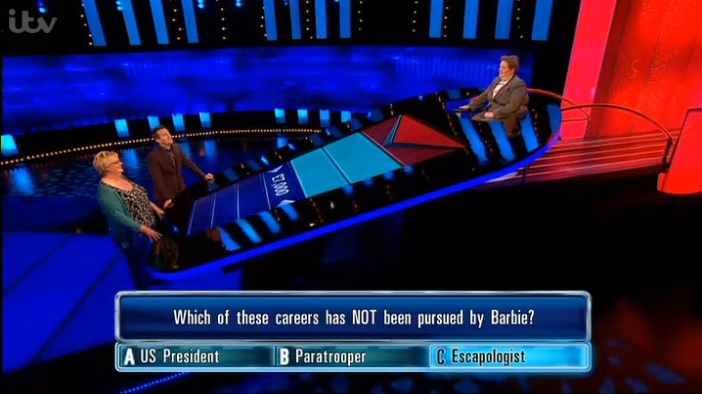
 At New Escapologist, we use Escapology as a metaphor. There are others we could have used, but it just so happens I was reading about Houdini five years ago in parallel to books about Bohemia and liberty. Ah, how it all came together!
I liked how Houdini’s combination of snazzy showmanship and chiding didacticism stood in for a wider parable. That’s what I wanted to do too.
I noticed that Houdini’s performance transcended conjuring and went into the world of allegory. The restraints from which he’d escape were often topical. For example, his icebox escapes referred to the up and coming frozen food industry. The idea was that modern conveniences that posed as liberating could in fact be traps. The person on the street had observed this and Houdini appealed to her/his sense of entrapment by theatricalising the escape fantasy.
Today, I came across an expert confirmation of my thesis. Jim Steinmeyer is a designer of theatrical illusions and historian of magic. In his book Hiding the Elephant: how magicians invented the impossible and learned to disappear, Steinmeyer writes:
It wasn’t really conjuring at all, even if his novel act had been derived from the world of magicians. Houdini created his own product. The drama of his performances was the sight of the little man challenged, playing David to society’s endless Goliaths, the archetypal victim who, within the strict confines of the vaudeville turn, rose to the victor.
So there we have it. That is part of what I hope is the appeal of New Escapologist, that we show through theory, example, and good humour how these “endless Goliaths” are toppled.
Pre-order Issue Nine in print or on PDF today.
Buy the complete back catalogue of New Escapologist with a 10% discount.
Or buy the complete back catalogue on PDF, with £1 off the price each issue.
Merchandising Opportunity?
Pre-order Issue Nine in print or on PDF today.
Buy the complete back catalogue of New Escapologist with a 10% discount.
Or buy the complete back catalogue on PDF, with £1 off the price each issue.
The lovely horrible stuff
The theme of the next issue of New Escapologist will be MONEY.
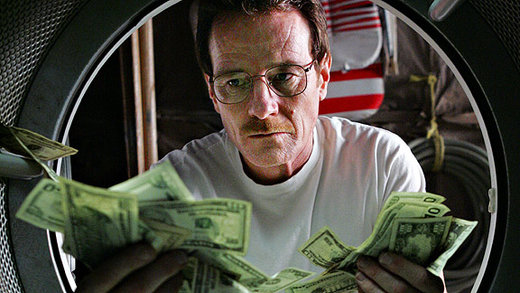
It will be released in August, titled Take the Money and Run.
In this issue — our ninth — we ask impertinent questions of an economist; discuss the idea of citizen’s income as a possible escape route for all; tap on the glass of some belljar utopias; learn how to rob a bank; hear the confessions of a serial homeowner; and examine the fine arts of malingering and truancy. All over a finely-typeset 90 pages.
We can also reveal that one of our several special guests is none other than Mr. Money Mustache, who was recently featured in the Washington Post.
You can now pre-order Issue Nine in both print and PDF.
Enjoy!
Buy the complete back catalogue of New Escapologist with a 10% discount today.
Or buy the complete back catalogue on PDF, with £1 off the price each issue.
Lonely Dystopia

There are some possible objections to the CI– and technology-driven solutions to the employment problem (by which I mean “working for a living” as the standard mode of existence).
We’ll cover some of these objections more fully in Issue Nine in August.
In the meantime, a reader writes:
I saw McAffee’s Ted presentation, and it brought me back to my 1976 high school sociology class. The teacher flashed an illustration on an overhead projector depicting what labor would look like in the future.
The illustration showed a comfortably well-off couple living in a pod-like structure that had an enormous picture window looking onto a large field of corn, an unmanned robot harvesting the field.
To me, it looked like one of the oddest and loneliest futures imaginable. I remember feeling slightly uncomfortable, even a bit repulsed, as I raised my hand and asked: “But where are all the people?”
Mcaffee’s lecture leaves me similarly perplexed and somewhat skeptical of this “utopia”, [in which] there is more time to “create”, rather than work, [and] we sit in our hermetically sealed, pod-like homes with our smiling spouses and field robots.
But of course, that is pure fantasy, and a unequal one at that. What we are more likely to see outside of the sterilized pod house are hoards of unemployed people, fighting for basic necessities, while a technician class competes for the rare chance [of] labor in such a scenario. For the most part, this utopia/dystopia is already well underway.
It’s a fair enough point. It was, after all, a dysopian novel that got this discussion rolling. And even from our position in the present day we can see the alienating effects of technologies of convenience.
The primary objection seems to be that nobody will do anything real anymore, that we’ll be thrust into a state of decadent and eternal boredom when meaningful work is removed.
My rebuttal would be twofold.
1) Meaningful work, for the most part, has already been removed. The majority of us live in cities, reaping the benefits of a minority agricultural community (facilitated by technology). Meaningful work still exists in some areas but it’s hardly the default career path. In this respect, the dystopia is already here. If we want to repair this, we can either radically back-pedal to a more meaningful pre-industrial-inspired economy or push on to a high-tech future in which CI is one possible solution to avoiding mass poverty.
2) Even if claustrosphere life were to become a mainstream option, we wouldn’t have to accept it, just as some of us don’t accept the prescribed life today. When sustenance labour or wage slavery is removed, we (as a society or individuals) can do anything. It doesn’t have to be pod dwelling. Depending on our prevailing interests, we could devote our new-found time and energy to saving the turtles, to putting astronauts on Mars, or to enslaving and depressing the former working classes in a whole new way. “We could explore space, together, both inner and outer, for ever, in peace.” More than anything, we could think outside the confines of a consumer economy. Anything.
A secondary objection seems to be that mass unemployment at the claws of sophistcated worker robots would lead to poverty and a sense of deranged competition. But the McAfee future already mitigates against that. With Citizen’s Income.
Buy the complete back catalogue of New Escapologist with a 10% discount today.
Or buy the complete back catalogue on PDF, with £1 off the price each issue.
The post-drudgery future
We’re creating a world where there is going to be more and more technology and fewer and fewer jobs […] The thing to keep in mind is that this is absolutely great news.
An economist called Andrew McAfee discusses the technology-assisted, Citizen’s Income-enabled post-drudgery future.
His talk has the same exact thrust as a piece I’m writing for New Escapologist Issue Nine (which is a tad annoying in a way, but I’m extremely glad that someone better qualified and better equipped is making some noise about this).
We’re talking about the wide-scale solution to the long-held problem of toil. It’s no trifle.
Watch the video, utopia-likers.
Buy the complete back catalogue of New Escapologist with a 10% discount today.
Or buy the complete back catalogue on PDF, with £1 off the price each issue.
CI: Overturning the Legacy of Slavery
From a stirring new article by George Monbiot (thanks to @justinlucent for sending it in):
most of the world’s people live with the legacy of slavery. Even in a nominal democracy like the United Kingdom, most people were more or less in bondage until little more than a century ago: on near-starvation wages, fired at will, threatened with extreme punishment if they dissented, forbidden to vote. They lived in great and justified fear of authority, and the fear has persisted, passed down across the five or six generations that separate us and reinforced now by renewed insecurity, snowballing inequality, partisan policing.
He goes on to discuss my favourite subject of the moment. Citizen’s Income:
[basic income and land value tax] are championed by the Green party. On this and other measures, its policies are by a long way more progressive than Labour’s.
A basic income (also known as a citizen’s income) gives everyone, rich and poor, without means-testing or conditions, a guaranteed sum every week. It replaces some but not all benefits (there would, for instance, be extra payments for pensioners and people with disabilities). It banishes the fear and insecurity now stalking the poorer half of the population. Economic survival becomes a right, not a privilege.
A basic income removes the stigma of benefits while also breaking open what politicians call the welfare trap. Because taking work would not reduce your entitlement to social security, there would be no disincentive to find a job – all the money you earn is extra income. The poor are not forced by desperation into the arms of unscrupulous employers: people will work if conditions are good and pay fair, but will refuse to be treated like mules. It redresses the wild imbalance in bargaining power that the current system exacerbates. It could do more than any other measure to dislodge the emotional legacy of serfdom. It would be financed by progressive taxation – in fact it meshes well with land value tax.
These ideas require courage: the courage to confront the government, the opposition, the plutocrats, the media, the suspicions of a wary electorate. But without proposals on this scale, progressive politics is dead. They strike that precious spark, so seldom kindled in this age of triangulation and timidity – the spark of hope.
Remember to sign the petition for CI if you approve of this courageous idea.
Buy the complete back catalogue of New Escapologist with a 10% discount today.
Or buy the complete back catalogue on PDF, with £1 off the price each issue.
Escape For All
As regular readers of New Escapologist will know, we see Citizen’s Income (also known as Unconditional Basic Income) as a possible and permanent “Escape for All”.
We discussed it briefly in Issue 4 (in an article by Sam Nairn of the London School of Economics) and occasionally online, but we’ll discuss it more credibly in Issue 9, the overarching theme of which will be monetary and called “Take the Money and Run”.
By giving a state-funded minimum income to every man and woman — regardless of age, physical ability, education, or wealth — we’ll be able to abolish poverty and make work far less an essential thing in one fell swoop. People will still want to work in order to pay for luxuries, but that will be a choice. Frugal Escapologists will be able to discount work altogether under this system; people who’d like to work part-time will be better able to do so; risk-averse people who’d like to start their own business or become artists will finally have a safety-net; and nobody will have to go hungry any more.
CI would be funded by consumption taxes on luxury goods; green taxes on corporations who use or pollute natural resources; and (best of all) by the savings incurred by dismantling the expensive bureaucratic systems that maintain and police the current welfare and pensions system.
It’s not crazy. The idea has notable supporters from the political left and right alike. Pilots have been conducted in Germany and Canada.
Finally, someone has actually taken the lead on campaigning for CI to be taken seriously. Watch the video below and, if you like the idea (and are British or European) sign the petition.
Buy the complete back catalogue of New Escapologist with a 10% discount today.
Or buy the complete back catalogue on PDF, with £1 off the price each issue.
New Escapologist Canadian World Tour
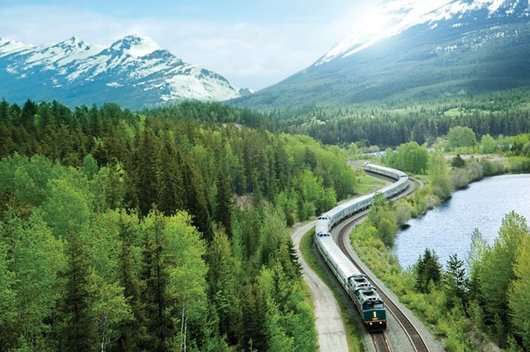
Samara and I will be crossing Canada by train this summer with stops in Toronto, Winnipeg, Edmonton, Jasper, and Vancouver.
This is our summer vacation, but we’re open to meeting with New Escapologist readers who happen to live in those towns.
Email me if you’d like to hang out, or just to high-five us from the window of the train.
Buy the complete back catalogue of New Escapologist with a 10% discount today.
Or buy the complete back catalogue on PDF, with £1 off the price each issue.
Suffering With a Smile
From a really excellent article about the nature of modern work by Mark Fisher.
At the top of the tower, there is no liberation from work. There is just more work – the only difference is that you might now enjoy it. For these CEOs, work is closer to an addiction than something they are forced to do. In a provisional formulation, we might want to posit a new way of construing class antagonism. There are now two classes: those addicted to work, and those forced to work.
and:
What we are forced into is not merely work, in the old sense of undertaking an activity we don’t want to perform; no, now we are forced to act as if we want to work. Even if we want to work in a burger franchise, we have to prove that, like reality TV contestants, we really want it.
Buy the complete back catalogue of New Escapologist with a 10% discount today.
Or buy the complete back catalogue on PDF, with £1 off the price each issue.