Minimalism vs The Cloud
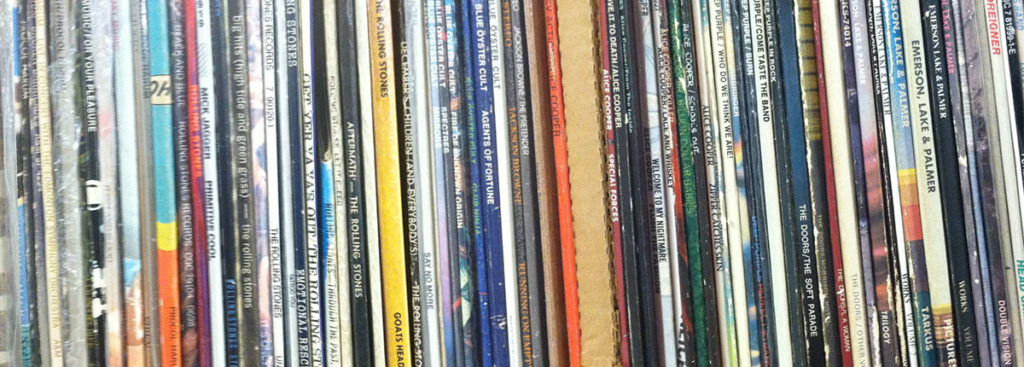
My stereo system (a turntable, two bookshelf speakers, an amplifier, and about 30 vinyl records) is a disgrace to my minimalism. I don’t need it and I don’t love it. But I do like it. As one school of minimalism would put it, it sparks joy.
I treat it as temporary. I might sell it one day, when it ceases to deliver the goods or when I need the money.
I keep wondering if I’d rather have the ullage (the empty space) instead of the stereo system. For now the answer remains: no, I’d prefer to have the records.
Part of the reason for this return to physical media was to buck against digital streaming and jab-screen devices. In many ways, I’m a 20th Century boy.
The bottom line, really, is that I don’t enjoy streamed music. Playing it has little appeal to me as an activity, so while the storage solution of The Cloud might look like a good one, it’s a failure in that the new system doesn’t actually deliver the benefits of the old one. Quitting something you enjoy without a higher goal (e.g. the plan is to move country) is no solution to anything.
I was going to write more fully about this today but, by happy coincidence, my friend Carrie just did the same. She speaks of the benefits of physical media:
It feels like [vinyl] somehow matters more, and because I’m listening with my whole self it’s much more emotionally affecting too.
[Streaming has] broken many artists’ ability to make a living from music. When you can stream pretty much everything ever recorded for less than you’d pay for a single vinyl LP, your streams are almost worthless in terms of what any artist gets paid.
and of the reservations about it:
vinyl is hilariously expensive and may need you to buy a whole bunch of new hardware too
The reasons not to buy a bunch of vinyl records remain the same as when I first put thought into this. It’s stuff. But as much as I dislike the cost and the responsibility of ownership, I also dislike the impoverished world offered by streaming.
The Cloud is a good place to stash your ugly, boring administrative documents. And it makes photographs more sharable and stops them from collecting dust. But music? Not everything needs to be invisibled away. I have real art on my walls too, not those horrible screens you can get now. And real books, not e-books. The physical world is better for you sometimes; to move around and manually make something happen is appealing to the primate brain. And we are primates.
I’m not saying every primal urge should be humoured or that everything should be analogue instead of digital but, overall, a balance can be struck in the interests of mental health and general quality of life.
I’d rather be with my partner “IRL” than look at her face on Zoom. I’d rather write notes with a pencil on paper than in an app. And I’d rather, for now, softly drop the needle into a shiny black groove instead of jab dumbly at yet another screen while wondering if I’m really hearing the proper version or if the streaming provider is punishing the artist I’m currently trying to admire, while simultaneously cursing the range of bluetooth. I mean, yawn.
I may of course feel differently about this some day. Perhaps when I next move to a different apartment.
*
New Escapologist is a friend of minimalism. Get the all-new Issue 15 in either print or digital format today (or whenever you’re ready).
Bullshit Jobs Cheat Sheet

I like this website. It’s an angry single-page summary of the Bullshit Jobs economic scenario in which our global society is ensnared. Or, as its author puts it, “a crude attempt of helping people to understand humanity’s #1 issue.”
And the Number One issue it surely is. Yet so few people describe it as such or talk about it so directly. Our economy should work to push money around to the places it’s needed, but instead we’re hollowing out the Earth and enslaving billions of people (often literally) to generate vast batteries of pointless wealth for tiny coterie of bastards.
We are 30+ years past said peak labor efficiency but continue to maintain the obsolete work-for-income paradigm. With fatal implications and consequences.
Instead of finally decoupling income from labor and distributing the wealth generated by our actual economy, we maintained this narrative of “never-enough-jobs”. [This has led to] to billions of purely systemic and/or redundant, non-contributing bullshit jobs.
The site quotes Thomas Jefferson, our forever boyfriend David Graeber, Margrit Kennedy, and Alan Watts. (I’ve never read Alan Watts. I think I prefer E. F. Schumacher when it comes to hippie economics but Watts’ name comes up a lot and he’s a goodie for all I know. The cheat sheet describes him as an early advocate of socially-responsible automation and UBI).
Most powerfully of all, the site reminds us that all of this pointless toil, as well as ruining lives and promoting staggering injustice, is destroying the planet. “To save the world,” it quotes Graeber as saying, “we’re going to have to stop working.” Graeber was right.
*
I Preserved My Freedom
In old books and films, I sometimes spot an indication that it was easier to live frugally in the past than it is today.
Ah, but wages rise with inflation you say? Well, that’s sometimes true. But there’s also the Big Mac Index to think about.
Anyway, I spotted another example today. It was in a memoir, written in the ’70s and recounting events from the ’60s. The passage refers to life in 1966:
At this time I was doing the book-keeping for Michael Rainey’s shop for £10 a week. I only had to go in a few times a week and balance the accounts, so it suited me well. I preserved my freedom at the same time as getting an income. Michael had been in the position of having no money himself and he appreciated the difficulties.
Now. There are a few things to say about this. First, there’s this business of living on a tenner a week. I am exceptionally frugal and have been connived a low-income/low-expenditure situation to arrive at weekly expenses of £130 (I spend more in reality but that’s the amount I need to stay housed and alive). A more typical figure is £628 per household per week (so £261 per person based on the UK average household size of 2.4 people). While £10 in 1966 might be a sum of money trivial enough to be called “a tenner” and to give away to a silly friend, I don’t think many of us would part with £261 a week on a similar wheeze today.
Second, I suppose the requirement to “go in a few times a week” would still hamper your freedom to an extent. You can’t just leave the country on a whim. You have to put clothes and shoes on. The phone could ring while you’re relaxing in the bath. But it’s a hell of a lot better than a full-time job. I’d do it. Also, 1966 was a more tactile, physical world: going out to accomplish things, riding buses, and physically tickling through paperwork were more normal and it wouldn’t be such an affront to freedom as it would be today with our networked digital technology. I think I’d like that physical world better in a way: all those cigarettes and pencil sharpeners and vacuum tubes would be fun. I could be wrong.
Third, working people, as a general rule, can’t afford the sort of empathy exhibited by the memoirist’s friend. We have our own troubles, our own desperate shortage of money and time and patience. Urgh. What a wretched age. Send me back in time NOW!
*opens one eye.* Did it work? No? Blast. Well, at least the Internet keeps me out of trouble. Mostly.
*
Issue 15 — Out Now!
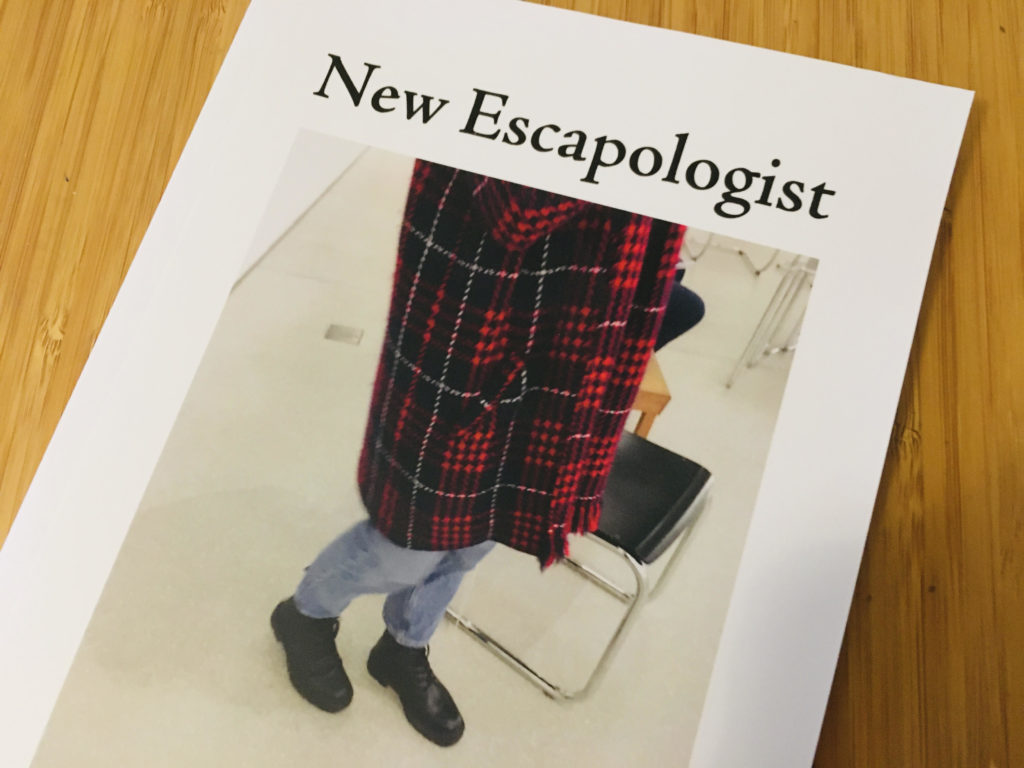
Issue 15 of New Escapologist is out now! No more pre-orders. If you buy a copy now, it will be promptly shipped.
The issue features interviews with Analog Sea’s Jonathan Simonsand BDSM model Ariel Anderssen. It has a review by Landis Blair of a 45-mile walk from his Chicago art practice to his hometown of Waukegan. It will also feature an absolute tonne of Robert Wringham as you might imagine, plus all your favourite columnists like Tom Hodgkinson and McKinley Valentine. It’s a good issue.
Subscriber copies and pre-orders have been shipped. Some UK orders are probably being received already but copies for EU and other locations will take a little longer (but they’re on their way).
Digital editions have also been emailed to those who bought them. Thanks to everyone who responded to our digital editions survey and to friend Marcus for his time and patience, the .epub edition is much better than previous efforts. It has decent typography, clicky web links, a proper TOC, a cover and author indexing for your e-library, and all the rest of it. It’s available for immediate download here. I’m going to reformat Issue 14 in the new year and circulate it to anyone who bought it previously, so look out for that too.
What else can I say? I hope you like it.
*
The Lost Art of Declining Politely
Ours is the magazine of “getting out of things.” We tend to focus on big things like jobs, but I sometimes think about adjusting the microscope to talk about escaping micro-commitments like parties you don’t want to go to.
I usually bin this idea because, really, it comes down to: just say no — politely.
An item in today’s Guardian confirms this decision but also made me think a little further about why so many of us have trouble saying no.
Maybe it’s because you don’t want to damage a relationship. But if a relationship is so fragile that it could break when you don’t want to go dancing, is it really a relationship worth preserving at such costs?
Maybe the fear of saying no is to save your own reputation. You don’t want to be seen as a bad sport or a wrecker or no fun. Not going to the party would be bad press for yourself.
I think the real reason, however, is a sort of projection. It’s our own fear of rejection (combined with decent human empathy) that is to blame. Because we don’t like be rejected, we couldn’t possibly reject another.
So that’s where the work needs to happen. If you don’t like to say no, you might need to work on your own fears.
At the risk of being mildly indiscrete, I think I learned the art of saying “no” from our own Tom Hodgkinson. When he asked me to write a column for the Idler in 2016, I giddily sent him my first try. “This is not what I had in mind,” he said, “This is more of a diary piece.” He explained what he was looking for and I got on with it.
It wasn’t the answer I wanted but at no point did I question Tom’s authority (or natural right) to say no. Since then, I’ve not struggled to reject New Escapologist submissions I didn’t care for. And when I politely declined an early cover design for Stern Plastic Owl, the designer thanked me for my clarity and we got on with doing the right thing instead.
That Guardian article does not encourage people to decline honestly or politely: it encourages us to wuss out and to tell white lies. This comes at a cost to our character and it disrespects people.
One of the things people struggle with, for example, is saying no to charity workers on the street. The article suggests we tell them that we already donate to another charity so as to “validate their cause and therefore their endeavour.” They know you might be lying, apparently, “but they also know why, so the exchange ends up being quite pleasant.”
I think not. Just because you’re afraid of rejection doesn’t mean they are. Respect them by being honest. Don’t waste their time. Let them go free to find success with a less stingy pedestrian. Here’s how to handle a chugger: don’t break your stride, smile kindly, and (at most) say “no thanks, sorry.” But always smiling. And always walking.
The same goes, basically, for any other request you don’t want to indulge. Decline politely, with clarity and honesty, and don’t stop.
*
Find more wisdom on getting out of things in New Escapologist Issue 15 (due this week!)
Hostile Environment
Yesterday, my partner got her certificate of citizenship. She took an oath of allegiance and we stood for the National Anthem without laughing. We had our picture taken with a portrait of the Queen (the new one of Charlie, they said, was still in the post).
There was a sense of pissed-off solidarity among the twenty or so new Brits in the room. The officer of ceremonies tried to make it all sound positive and almost like a registry office wedding but we were all at the end of a long and tiring journey. One couple in particular looked downright furious. To this couple I tried to telegraph a message: “Don’t fuck it up now. Not at the final hurdle.”
Anyway, we made it. Phew! And not a moment too soon, it seems. A remark that will make sense in a minute.
For anyone angered by (or curious about) the “hostile environment for immigrants” I struggled to write about in The Good Life for Wage Slaves, the political writer Ian Dunt explains it well:
In 2012, as part of the Hostile Environment policy, Theresa May set a minimum income level for British citizens to be allowed to bring their foreign wife or husband to the UK. There was no need for it. People on spousal visas are not entitled to claim welfare and most of them have to pay the NHS surcharge on application. But May, despite her recent rehabilitation as some kind of imaginary liberal haunting the conscience of her former self, was in fact a deeply authoritarian and mean-spirited home secretary, so she did it anyway.
The minimum income requirement was set at £18,600. That might not sound high, but it is. People who work part-time in retail or hospitality – often women raising a child – don’t reach it. But even where someone could satisfy the threshold, it frequently hit them as a sequencing problem. They’d meet their partner when they were living in another country, fall in love, settle down, get married, maybe have a kid. Then, one day, they’d decide they wanted to come home. And that’s where the problems started.
This minimum income requirement was precisely what made it difficult for me to come home with my wife. I didn’t have that sort of income as a self-employed writer so we had to get jobs we despised with good reason and to keep them for almost three years.
We couldn’t quit those jobs for fear of de-facto deportation, a fear that lingered over us for years. We couldn’t lose them either, which made it difficult to refuse to do certain things at work or try to negotiate better conditions. Thousands of people are still in this trap.
Usually they would have no idea what was happening. Most had never heard of the spousal visa requirements. It was typically beyond their moral comprehension that the government would put obstacles like this in front of their family life. They assumed, on some deep instinctive level, that being able to live with your husband or wife was a core individual right as a British citizen.
That was us. We had no idea what was happening because it wasn’t happening when we began our relationship. We met in 2008, moved in together in Canada, and decided (hah!) to come back to my country together in 2015. Theresa May’s new rules were put in place in 2012.
Now brace yourself for an update. The £18,600 income requirement that gave us so much trouble and didn’t exist until 2012 was raised this week to an astonishing £38,700:
This is higher than the average and the mean income in the UK. It’s unachievable for around three quarters of British citizens. [Most nurses, for example] do not earn anything like that much. They’ll be barred from living with a foreign partner. Many teachers do not earn anything like that much. They’ll be barred from living with a foreign partner.
And it’s all in service of what exactly?
It makes no sense. Inward migration last year was 1.2 million. The total number of visas in this category was 65,000. Even if the move eradicated them all, it would barely dent the numbers. No voter is going to give [current Prime Minister] Rishi Sunak credit for knocking 50,000 off the overall figure. But for the sake of the impossibly small chance that one does, he is mutilating the lives of British citizens.
Ian’s piece goes on to describe the material and emotional effects this has on families, caused entirely, he points out, by a political party so enamoured of “family values.”
It may not effect you personally (and I sure wish I didn’t have to sully myself by reading about these horrors) but if you’re interested in the Hostile Environment (which, lest we forget, is no media slur but the original official name of the project), it’s worth reading Ian’s piece in its entirety.
As an Escapologist, you probably believe in free movement up to a point. I believe in open borders (read the case for it in the relevant chapter of this book if you’re not sure about that one) but nobody in politics is suggesting anything remotely that radical at present: perfectly ordinary middle-class people who met their partners abroad just want to come home without it ruining their lives is all. And the request is being cruelly, brutally, authoritatively denied.
An Escapologist’s Diary: Part 75. Boat!
As part of my ongoing hostelling adventure, I slept on a boat!

We’re looking at existenzminimum again:
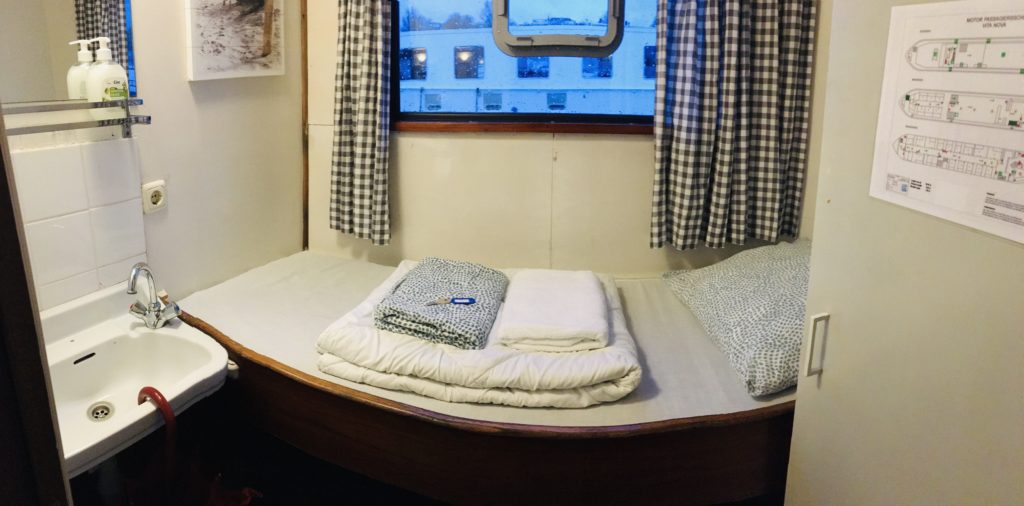
You get a private cabin (privacy being a plus in hostels) reminiscent of the cabin you get on a sleeper train or an overnight ferry.
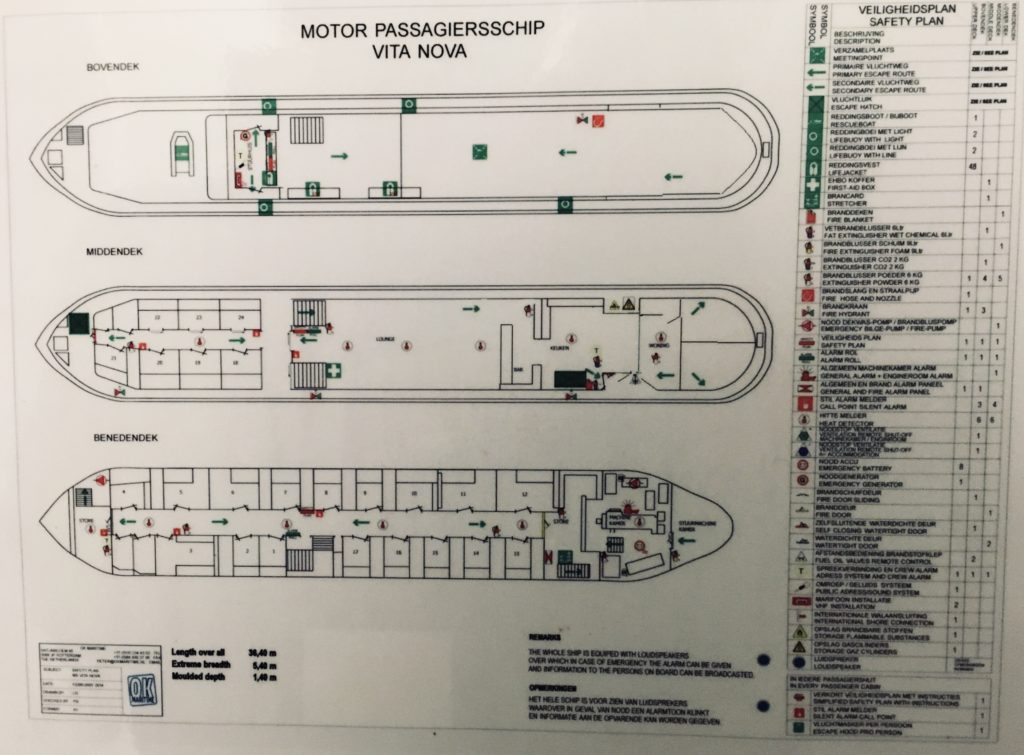
Since the boat is on an Amsterdam canal rather than a life on the ocean waves, you feel no watery motion while sleeping at all.
But if you open a curtain in the dead of night… you might see a duck. 🦆
*
There’s a little more about the minimalism of hostels in Issue 15.
Escape to Life
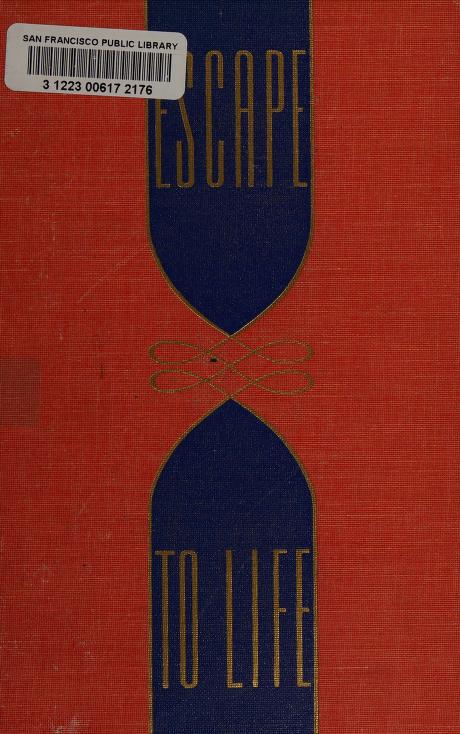
A beautiful cover of a rare book: Escape to Life by Erika and Klaus Mann. The book profiles the artists and intellectuals who escaped Nazi Germany to live elsewhere in Europe and America. The ticklish sense of justified flight is deeply exciting.
The book can be found easily in German, which is fair enough because it’s a German book BUT it was first published in English and when parts of the original draft were destroyed the English version was used to recreate the lost content. It’s a shame that it should be out of print now.
I don’t have £130+ to buy a copy from AbeBooks but the Internet Archive has a scanned library copy, which, mercifully, can be read online.
Eccentrics
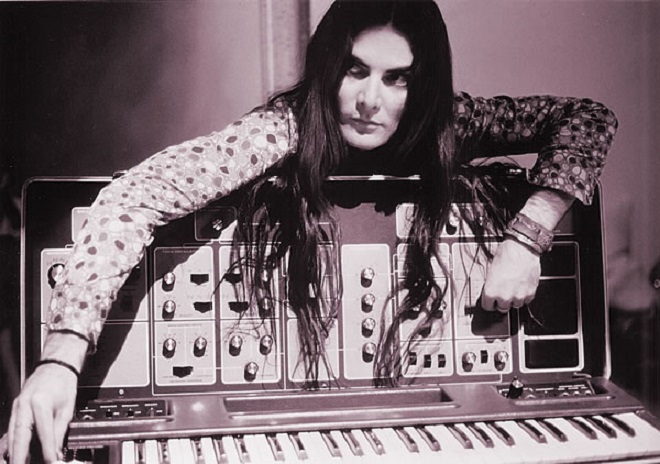
This is from Wendy Carlos, genius musical composer:
The greatest thing we’ve got going in our culture is our eccentrics. I was once embarrassed by my eccentricities but now I value them.
In other words, be different. Don’t be afraid. To plough your own furrow benefits not just yourself, but the whole world. To stand apart is not to turn your back on society. You’re at least the control group, at best the great experiment.
In the spirit of this quotation, New Escapologist Issue 15 is subtitled Experiments in Living. Our eccentric spirit animals are, if not Carlos herself, Edward Carpenter (addressed), John Stuart Mill (channelled), and Ariel Anderssen (interviewed).
Give My Child an Ikea Desk and Twelve Hours a Day of Sedentary Typing
Thanks to reader N for sharing this passage from Dave Eggers’ Heroes of the Frontier.
It’s nominally about parenting but really it’s about how to spend a good life versus the violence of social expectation:
She began to conceive a new theory of parenting, where the goal was not the achieving of a desired result. The object is not to raise a child for some future outcome, no! Times like these, together in the pines amid the fading light, as the kids run through the long grass, her son gravely teaching himself archery while her daughter tries to induce some self-injury, these moments alone were the object. Josie felt, fleetingly, that she could die having achieved such a day. Get to a place like this, get to a moment like this, and that alone is the object. Or it could be the object. A new way of thinking. Stretch some of these days together and that’s all one could want or expect. Raising children was not about perfecting them or preparing them for job placement. What a hollow goal! Twenty-two years of struggle for what – your child sits inside at an Ikea table staring into a screen while outside the sky changes, the sun rises and falls, hawks float like zeppelins. This was the common criminal pursuit of all contemporary humankind. Give my child an Ikea desk and twelve hours a day of sedentary typing. This will mean success for me, them, our family, our lineage. She would not pursue this. She would not subject her children to this. They would not seek these specious things, no. It was only about making them loved in a moment in the sun.
*