Mandate THIS!
The office was full of distractions, and I found it difficult to focus. People were frequently pulling me into unnecessary meetings or taking calls around me. Also, I function best when I have a snack every two hours or so. At the office, I was too self-conscious to eat, so I spent hours trying to distract myself from my hunger instead of working.
Thanks to Reader J for drawing our attention this brilliant piece from the Walrus, a magazine I used to read in Canada. “One for the Escapological archives,” says J, and they’re not wrong.
Big Canadian organisations — including the government and the banks — are apparently enforcing something called RTO mandates, RTO meaning “return to office.”
They’re forcing people back into offices (and therefore back into cars and onto commuter trains) who have been working perfectly well at home since the pandemic (which, really, was over half a decade ago now — and weren’t we all supposed to embrace “the new normal?”).
I love that calling it an “RTO mandate” puts an official- and therefore important- and respectable-sounding sheen on what is little more than a mass yank of the leash. The writer of the piece, Kathy Chow, agrees:
I suspect the real motivation behind RTO mandates has nothing to do with productivity or company culture and everything to do with control. That is what the modern office was designed for, after all.
There’s more. Enjoy.
*
Reject office culture forever! Subscribe to New Escapologist magazine. We keep an eye on this stuff
Obvious Tech Tip
You know me. I like to give tips to help you escape the mire of social media and, where possible, get back to to the Old Web.
Today’s tip isn’t about the Old Web exactly but it concerns the quality of everyday online experience. It’s this:
Don’t link to the YouTube homepage and don’t visit YouTube by typing “yout” into your address bar. And obviously don’t Google it like a dumbass. Create a link or a bookmark instead to your YouTube subscriptions page.
I can’t believe it took me so long to think of this. Manage your subscriptions wisely and you’ll never again see any of the 20%+ of YouTube videos that are AI slop.
*
It Seems Furious That We’re Free

These quotes come from a short escape story (published in The End of the World as We Know it: New Tales of Stephen King’s The Stand) called “The African Painted Dog” by Catriona Ward.
The titular wild animals escape a New York zoo by clambering up a fallen tree during a thunderstorm:
Below, the sparkling black snake leaps and lashes at the water, as if angry it can’t reach us. It seems furious that we’re free. So we get up and dance on our hind legs and shout down at it all, water an snake, dancing in the rain. Thunder and rain pounds at us, but we’re part of it now.
and
Even though we’re afraid of the storm, everything in my nose and body is shouting. The feel of the new ground beneath our feet. The scents all around, the wide-open space, no longer surrounded by rock walls. New, new, new!
and
I am Chachacha the snake eater and escapee, explorer of new worlds.
That’s good shit.
*
Trending Topics
Bit of a random thought, this one. But bear with me.
When I read the Guardian online, my eye always drifts to the trending stories panel to the right of the actual article. It’s the sort of distraction I could solve with a hack to AdBlock Plus, but I don’t mind because it’s a miniature snapshot of The World Brain: what people (or at least liberals and those too cheap to subscribe to a newspaper that fits their political position) are concerned about at the moment.
If there’s a truly devastating world event that day, news of it will be at the top. But generally speaking, the big news of the day will be second or third from the top. The top spot (and at least one other spot in third, fourth or fifth place) will be something more banal.
Today’s top spot — two places above today’s main story — is about the weather: a possible snow storm. Not even the actual weather, but some possible weather.
Other frequent examples are items from Pamela Stevenson’s sex column with headlines like “my wife demands a threesome but I’d rather die,” food-related items (cooking hacks, recipes, restaurant reviews), listicles concerning personal wellbeing or sleep, and tidbits about popular TV things like Traitors.
I’m not calling anyone trivial or saying that The World Brain has brain rot. It’s interesting, I think, that short term needs float to the top of the agenda. It’s because short term needs, by definition, are more urgent.
Urgent needs always need addressing first.
If you’re thirsty, you’ll most likely solve that problem before dealing with anything connected to a mid-term goal like going for a run. If “go for run” needs to be ticked off your to-do list, you’ll be more likely to do that than do anything towards a long-term goal like becoming a person who writes novels or goes for walks at night to contemplate the universe.
This is reflected collectively in the trending panel.
So don’t be ashamed if you don’t tend to your longer-term, personal improvement goals. Do what you can, but catering to the short-term first (while the house is proverbially — or literally — on fire) is normal and wholly forgivable. Be sweet to yourself. Don’t berate yourself for not yet being a Great Philosopher when, in reality, a snow storm threatens your journey home.
*
An Escapologist’s Diary: Part 84. 2025 Review.
The year started badly. I’d intended to take a sabbatical and I got one in the form of a long illness. For five months I was housebound with an unpleasant case of TSW, some weeks of which were bedbound. It was very shit.
I Hear the Door Slam Shut
Then I run: down the stairs, down the street, away.
A literal escape from a locked flat, four floors up. While hungover. Genuinely thrilling.
*
Squander
I’m sometimes asked if there’s a contradiction between my “you can escape from work” message and “set up your own small business” as a mode of escape.
To start with, going into small business is only one idea. There are plenty others if going into business is not the escape route for you. But I would say that any small business efforts you make will be for something worthwhile, something you believe in, instead of just more crap for The Man.
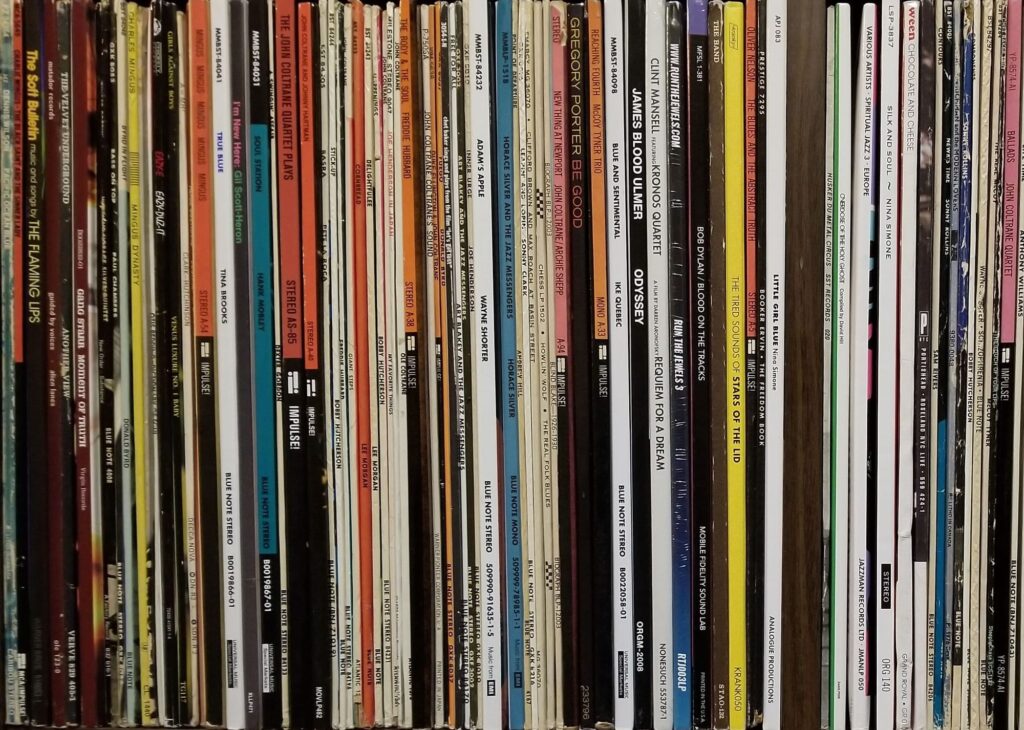
Anyway, Reader R sends me an excerpt from an interview with a record store guy called Lincoln Stewart who has the right idea. Lincoln says:
Most people try to make as much money as possible, which leaves them with little time. I work as little as possible and therefore have much free time. One could argue I squander my time the way many people squander their money, but that’s a whole different discussion.
That’s the spirit.
I fall into things. I fell into filmmaking and film distribution. I fell into web design and software development. I fell into records. As I said, I try to pursue a time-rich life. If I could go through life without seeing another record, I’d be a few hours happier each month than I am now. I’ll figure it out some day.
The interview comes from an organ called Running Man Press, by the way. It’s a print shop in my sometimes-home of Montreal, but for a moment I thought New Escapologist had a competitor.
*
Insane
This is from Jesus Christ Kinski, a brand-new novel by Ben Myers. I’m not sure if this is the fictionalised Kinski speaking here or a real quote from a real interview, but it’s good either way:
I live freely. And to most people who stuck in unsatisfactory marriages and dismal jobs, that appears insane. To most it is beyond comprehension. If one has to be insane to enjoy freedom, then so be it.

*
Get in and Boogie
From Stephen King’s The Stand:
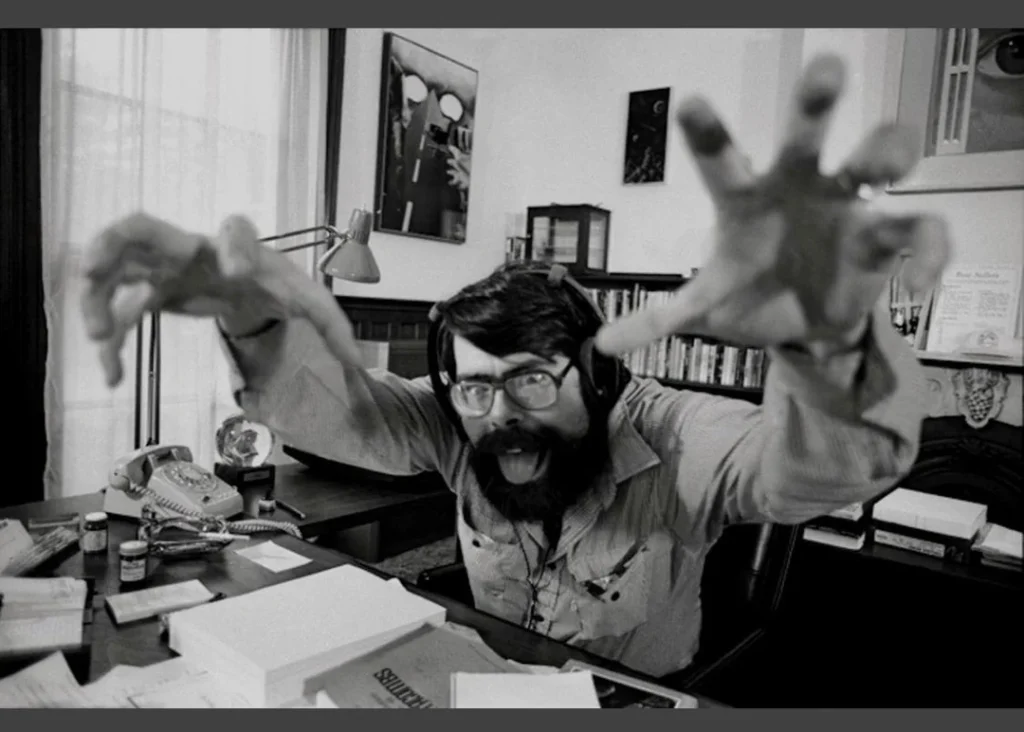
Larry felt a strong and guilty impulse to just turn tail and run. Go back … and get the Z. Fuck the two months’ rent he had just laid down on the space. Just get in and boogie. Boogie where? Anywhere. Bar Harbour, Maine. Tampa, Florida. Salt Lake City, Utah. Any place would be a good place, so long as it was comfortably over the horizon.
*
Willenbecher
I’ve been watching these short video profiles of the loft-dwelling generation of New York artists. It’s fun to see how these artists live, work, and how they all remember hanging out with Warhol.
They also all seem so young despite being in their 70s, 80s, and 90s. The reason for their youthiness seems obvious to me: they don’t have day jobs to sap their energy and their time. They do what they like to do and, importantly, they do what they’re supposed to do: they’re not railroaded by some timewasting endeavour necessary to pay rent. They don’t suffer daily separation anxiety about not doing what they ought to be doing.
Today’s artist is John Willenbecher. He puts it plainly:
If there’s one thing I’ve done in my life that I think is really great, it’s that I’ve never had a job [laughs]. I’ve never had to work for somebody. I was never a trust fund baby but I’ve always somehow managed to get along.
Live on your wits, live for your art, live for ages. If you can.
*