Harness the Zombie
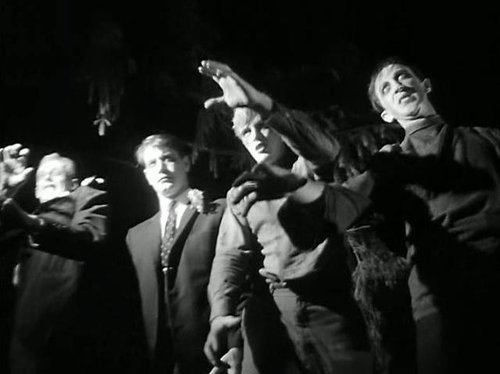
Here’s a productivity technique for idlers, night owls, and slugabeds. Harness the Zombie.
I’ve tried to be a morning person. I admire the willpower of convolvulaceae such as the Frog Eaters; the Vanderkameras; and the White Queen who could “believe as many as six impossible things before breakfast.”
But I can’t do it. My higher functions (especially ones as abstract as belief) don’t kick in until much later in the day. Even if I crow-bar myself out of bed at a respectable hour, my synapses don’t start firing usefully until my fried eggs are thoroughly digested.
Lucky for me, I’m an escapee, so I can structure my days however the hell I like. On the other hand, I do sometimes wish I had more to show (either in terms of productivity; or deliberate, waking leisure) by the time lunch rolls around.
But as Henry Miller said, “if you can’t create, you can work.” In the crusty-eyed mornings, you can at least function as a servant to your higher self. You can prep the ground for when your brainy self wakes up and is ready for a little light cathedral-building. Or in catchier terms, you can “Harness the Zombie.”
Before I go to bed at night, I spend a few minutes thinking of tomorrow’s duties. Many of them will be quite lowly tasks – mechanical or trivial errands such as trips to the bank or the post office. Instead of squandering my post-meridian window of higher functioning on such crappy jobs, I delegate them to the zombie – AKA my own sleepy morning self.
If something can be done largely without engaging the brain whatsoever – basic domestic tasks, physical exercises, hammering a nail into the wall – get the zombie to do it. Leave it to Lurch.
Just be sure to programme his tasks before you go to bed. He can’t plan his own tasks, remember. He can only follow basic instructions. If necessary, write them on a post-it note and stick them to his forehead.
By the time your conscious mind flickers into life in the mid-afternoon, all of the nonsense work has been taken care of by your own loyal house zombie.
Buy the complete back catalogue of New Escapologist with a 10% discount today.
Or buy the complete back catalogue on PDF, with £1 off the price each issue.
Whence Leisure?
Here’s a thorough review of what sounds like a very interesting book. Normally I wouldn’t direct you towards a book I had not yet read, but my library doesn’t have a copy yet and I’m eager for someone in my sphere to read it.
The book is called How Much is Enough?: The Love of Money and the Case for the Good Life.
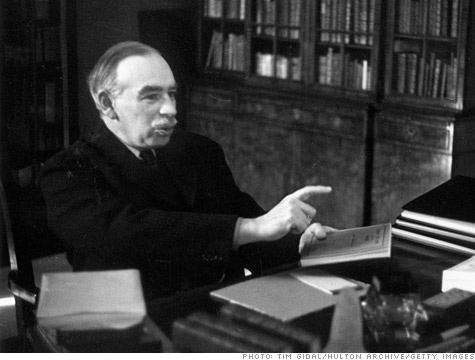
Its premise, it seems, is to assess why we don’t have the “life of leisure” foreseen by optimistic pundits in 1930 (namely John Maynard Keynes, who Escapologists will remember as the man who said “The difficulty lies, not in the new ideas, but in escaping from the old ones”).
Working hours are longer than they’ve ever been (a six-day work week was recently proposed as a solution to Greece’s economic woes) and thanks to portable telephonic gimcracks, we’re expected to be working even when we’re not at work. It shouldn’t be like this! We, the minority of people not obsessed with work, often feel as if we’re trapped in a Philip K. Dick-style alternate history where something just doesn’t feel right.
Even though we have the technology and the human hands to run the basics of agriculture and production and the minds to conduct research, we still this mad idea that basic dignity has to be earned when it should be a simple right. We should be living the life of leisure as Keynes predicted and as Buckminster Fuller emplored. But instead we toil pointlessly, supervising the supervisor of other supervisors.
So the book attempts to answer why we don’t have this Keynesian life of leisure. According to the Globe and Mail‘s reading of the book:
the free-market economy is the villain. It allows employers to dictate terms of work and inflames our innate tendency toward competitive, status-driven consumption. Keynes failed to see that the evils of capitalism … might become permanently entrenched, obscuring the very ideal they were initially intended to serve.
That’s what New Escapologist (and others before us) have been saying for ages. “The economy is a human-made thing designed for our convenience,” I wrote the other day, “it serves us, we do not serve it”. And in today’s economy, in which educated people struggle to pay for their far-from-ostentatious urban lives, this fact should be shouted by sengerphone from the rooftops. Or at least vigorously Tweeted.
The book looks like our sort of thing. Give it a crack if your library has a copy.
Buy the complete back catalogue of New Escapologist with a 10% discount today.
Or buy the complete back catalogue on PDF, with £1 off the price each issue.
Bernays
Even though we slagged him off in Issue One (due to his fathering public relations), here’s an Escapological quote from Edward Bernays:
Never permit a dichotomy to rule your life, a dichotomy in which you hate what you do so you can have pleasure in your spare time. Look for a situation in which your work will give you as much happiness as your spare time.
Buy the complete back catalogue of New Escapologist with a 10% discount today.
Or buy the complete back catalogue on PDF, with £1 off the price each issue.
The post-materialist generation
Once you give up on the idea of making money or owning a house with a huge lawn and embrace the notion that even paying off your student debt may be a Pollyanaish dream, what’s left? Doing something way more fun, obviously.
Economists have spotted that the post-millennial generation are buying and consuming less physical stuff than Boomers and Gen-Xers did in their own twenties and thirties. It’s due to financial necessity, environmental conscience, and post-materialist tastes, but it’s causing fears for the future of the economy.
But as this guy says, who cares?
The economy is a human-made thing designed for our convenience. It serves us, we don’t serve it. It’s not some dark god called Economor to whom we must make sacrificial offerings or fear its wrath: it’s just a system of boring gold-based policies we made a couple of hundred years ago (and perverted beyond recognition some ten years ago), which doesn’t even make a lot of sense anymore. And if we don’t start prioritising our natural environment as a concern, the planet won’t be able to sustain any life – human or economic.
What the conservative sees as bad times, I can’t help seeing as an exciting period in which we might actually – belatedly – stop prioritising the consumer economy and got on with something else.
Trouble is, I’m not sure we have become a post-materialist society yet. I’m a member of that post-millennial generation (and was way ahead of the curve when it came to getting rid of all my stuff and becoming a cloudgeist) and most of my peers are just as thick-headed and stuff-hungry as anyone from my parents’ generation.
Judging by popular topics in the media, it does feel like we’re heading into a post-materialist consumer period in which digital properties, educational achievement, and physical prowess are more important status symbols than the old materialist measures of success. I just worry that it’s illusory.
Buy the complete back catalogue of New Escapologist with a 10% discount today.
Or buy the complete back catalogue on PDF, with £1 off the price each issue.
Life of a poet
Our sub-editor, Reggie, sent me this grubby poem. He finds it depressing but I like it.

Poem For My 43rd Birthday
Charles Bukowski
To end up alone
in a tomb of a room
without cigarettes
or wine–
just a lightbulb
and a potbelly,
grayhaired,
and glad to have
the room.
…in the morning
they’re out there
making money:
judges, carpenters,
plumbers, doctors,
newsboys, policemen,
barbers, carwashers,
dentists, florists,
waitresses, cooks,
cabdrivers…
and you turn over
to your left side
to get the sun
on your back
and out
of your eyes.
Buy the complete back catalogue of New Escapologist with a 10% discount today.
Or buy the complete back catalogue on PDF, with £1 off the price each issue.
World’s Most Livable Cities
Escapologists wanting to leave their home country, whether for a mini-retirement or permanent resettlement, would do well to consult the annual quality of life lists. (The one conducted by Mercer is probably the most consulted and there’s one by The Economist Intelligence Unit too.).
My personal favourite is the one published by Monocle magazine, which just came out. I have a special love for this list because it takes into account such measures as “number of bookshops” and “well-maintained swimming lakes” as well as the usual quality of life indicators (like crime rate, infrastructure, and cost of living).
I notice that Montréal has fallen from 19th place to 24th in the list since I moved here two years ago. Probably just coincidence.
Here is 2012’s top ten most livable cities according to Monocle:

The rankings continue thusly: Kyoto (11), Fukuoka (12), Hong Kong (13), Paris (14), Singapore (15), Hamburg (16), Honolulu (17), Berlin (18), Vancouver (19), Madrid (20), Barcelona (21), Portland (22), San Francisco (23), Montréal (24) and Geneva (25).
Buy the complete back catalogue of New Escapologist with a 10% discount today.
Or buy the complete back catalogue on PDF, with £1 off the price each issue.
Monumental
We quit our jobs, sold our stuff and ran to the woods to be free.
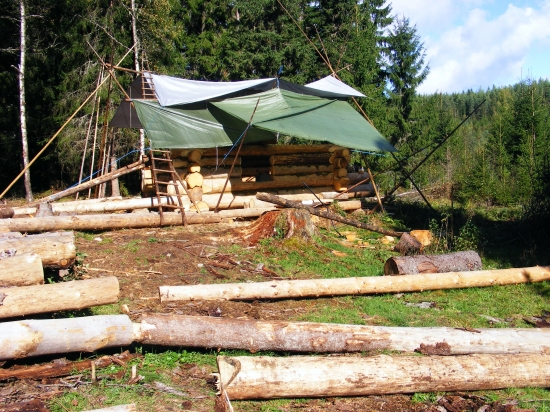
I’ve been enjoying the exploits of this Danish family living like Thoreau in the woods. They built a log cabin called The Monument and now they live in it.
I am a big fan of this very literal kind of Escapology. There’s no messing around with automated companies or clinging on to expensive creature comforts. They literally escaped and started over.
When I started out with New Escapologist, I was inspired by the Bohemians and Walden and Eco Villagers like my contacts at Findhorn, but I knew very well I’d have difficulty sacrificing certain Bourgeois comforts.
I now live a spartan, quasi-Bohemian life in a cheaper foreign city. I own barely anything, earn and spend next to nothing, but I was too chicken to say goodbye to things like central heating and WiFi and privacy.
But as Larry Niven said, F x S = K. The more freedom you want, the more securities you must sacrifice. The key, I suppose, is finding the right balance. You’ll not regret it.
Buy the complete back catalogue of New Escapologist with a 10% discount today.
Or buy the complete back catalogue on PDF, with £1 off the price each issue.
Teaser
Buy the complete back catalogue of New Escapologist with a 10% discount today.
Or buy the complete back catalogue on PDF, with £1 off the price each issue.
Towards Zero Waste

I read a few weeks ago that Wales is almost halfway to becoming a ‘zero waste’ society. With 48% of their household garbage being recycled, they’re doing better than almost any other Western country.
Reducing one’s impact on the environment is one of the key aims of minimalism (and minimalism is a key tenet of Escapology), so my partner and I got to thinking about how we could nudge our own household closer to the zero waste target.
We were already casual recyclers of the usual materials (plastic, glass, paper, cans), but we were still producing a bag of miscellaneous garbage every week. These are the steps we took to further minimise what we send to landfill:
– We checked the details of what can be recycled in our neighbourhood. It turns out that Tetrapacks (milk and juice cartons) can be recycled but we’d always ignorantly binned them. So now we recycle those.
– Our area has no municipal compost programme and we have no garden, so a sizable portion of our waste has been vegetable matter. My girlfriend’s parents, however, live in an area with a compost programme, so we keep it all in a Tupperware box, which I then carry to their house on our weekly visit.
– I never used to bother recycling small pieces of paper like bus tickets and grocery receipts. Fiddly, innit? But now I do.
– We’ve committed absolutely to reusable grocery bags. We never accept a single-use plastic bag from a shop now. Ever! I hate carrier bags. When they’re not suffocating babies or choking sea turtles, they’re hanging forlorn and muddy in a tree. Let’s stop using them.
The only things left in our garbage at the end of the week are non-recyclable plastic wrappers, beer bottle tops, and egg shells. It can be squished down to the size of a tennis ball.
Garbage management is not going to help directly in your escape, but looking after the environment will help us all to live in a better world. Like they do in Wales.
Buy the complete back catalogue of New Escapologist with a 10% discount today.
Or buy the complete back catalogue on PDF, with £1 off the price each issue.
Welcome, new readers
We enjoyed a spike in blog readership this week after being mentioned on a couple of more prominent blogs. Huzzah!
I’d like to welcome these new readers. Welcome! I very much hope that you stick around for a little while.
In case you’re wondering precisely what all the fuss is about, here’s a little FAQ by way of an introduction:
What is Escapology?
It’s about deftly avoiding the potential traps of modern life: debt, stress, unrewarding work, bureaucracy, marketing, noise, and over-government. It’s about embracing freedom, Anarchy and Absurdity. It’s about overcoming miserliness, passive-aggression, mauvaise fois and submission. Escapology asks you to consider the circumstances in which you would most like to live and encourages you to find a way of engineering them.
What is this blog?
It’s the online companion to a magazine called New Escapologist (available to order in both print and PDF at our shop).
Both the blog and the magazine both discuss the above subject of “Escapology”.
The blog is updated regularly, but not to a schedule.
What is the magazine like?
Each issue is a compendium of funny and existential essays and anecdotes relating to Escapology. It is beautifully typeset, it is square, it is released to an irregular schedule, it is between 34 and 110 pages, and it can be purchased (in either print of PDF) here.
Who writes all this?
The magazine has writers and illustrators from all over the world. The blog is maintained by me, Robert Wringham. I’m the editor of the magazine and also a humourist and a stand-up comic and a bunch of other stuff.
What would I do if I didn’t go to work?
There are many options. Escapologists have reported enjoying travel; charity work; political activism; cottage industry; dedication to an art or craft; physical challenges; autodidactism; and decadent laziness. To go some way to answering this question, I maintain an online diary to document my post-escape life. It’s called An Escapologist’s Diary.
You talk about minimalism a lot. What does minimalism have to do with Escapology?
One of the most important things to strive for as an Escapologist is mobility. Each possession or dependency is a threat to mobility.
Why be a minimalist? Who wants to live in a white-walled box?
I’ll hand over to Leo Babauta (who fields more questions about minimalism here and here).
It’s a way to escape the […] excesses of consumerism, material possessions, clutter, having too much to do, too much debt, too many distractions, too much noise. But too little meaning. Minimalism is a way of eschewing the non-essential in order to focus on what’s truly important, what gives our lives meaning, what gives us joy and value.
Does your project have anything to do with Houdini?
He was the inspiration for it. We use escapology as a metaphor:
Houdini’s popularity as an escape artist came about during a time of technological and political revolution. It was during the 1900s that Ransom Eli Olds implemented the first mass production of marketable cars, Tomas Edison’s phonograph made a commodity out of music, and the colonial expansion of Europe and America prompted the birth of the somewhat unpleasant political period known now as New Imperialism. Technologies and movements initially plugged as liberating would soon be discovered by thinkin’ types to be nasty, horrible traps designed only to placate, segment and enfeeble. When people become dependent upon companies or governments to entertain them, to transport them, to plan their days and to import their goods, they forget what it is to be free, alive and autonomous.
The work of Houdini and his contemporaries escaped the province of curiosity – that of conjuring and ventriloquism – and into the universe of metaphor.
Taken from An invitation to New Escapology.
So that’s us in a nutshell. There’s more about us here, and you can further connect to our goings on via our RSS and Facebook page. Enjoy!
Buy the complete back catalogue of New Escapologist with a 10% discount today.
Or buy the complete back catalogue on PDF, with £1 off the price each issue.